Where the Last Ferry Waits
Page 129 of 218
Chapters
She checked it against her bank balance, then checked again. Her penciled total held. The budget did not make a workshop appear, but it made the next search smaller and more exact.
Pippa clipped the page into her ledger. The brass pencil clip caught the light from the work lamp. For the first time since Iona had handed her the key, she could see a decision beyond accepting or losing. The new one was less grand: find a place that fit the work she could prove she had.
That afternoon, she sent Iona the technical notes. She attached the tally from the three-crate trial, the minutes Dev had spent on the handoff, and the estimate for a paid overlap. In the message she made no recommendation about what the company should value. She stated what each option would require.
She paused over the send button. Once sent, the figures would belong to the company’s decision, not just her ledger. She clicked.
A reply came before she had put away the measuring tape. Iona thanked her and confirmed the lease would pass to the storage operator. No accusation, no offer to reopen the terms. Pippa read it once and filed it beneath the shed diagram.
Then she phoned the supplier who had let her use a spare bench for small jobs. “I need to revise what I can take on,” she said. “No lift-dependent work. No promise on a motor I can’t handle on a bench.”
The supplier answered with a hum that might have been agreement or calculation. “That rules out the good-paying jobs.”
“It rules out jobs I can’t do safely.”
“Fair enough. I’ll keep your name for the smaller repairs.”
Pippa thanked him and ended the call. The phrase smaller repairs sat oddly in her mind. Not lesser repairs. Not pretend work. The kind she could complete with tools she could afford and a space she could actually rent.
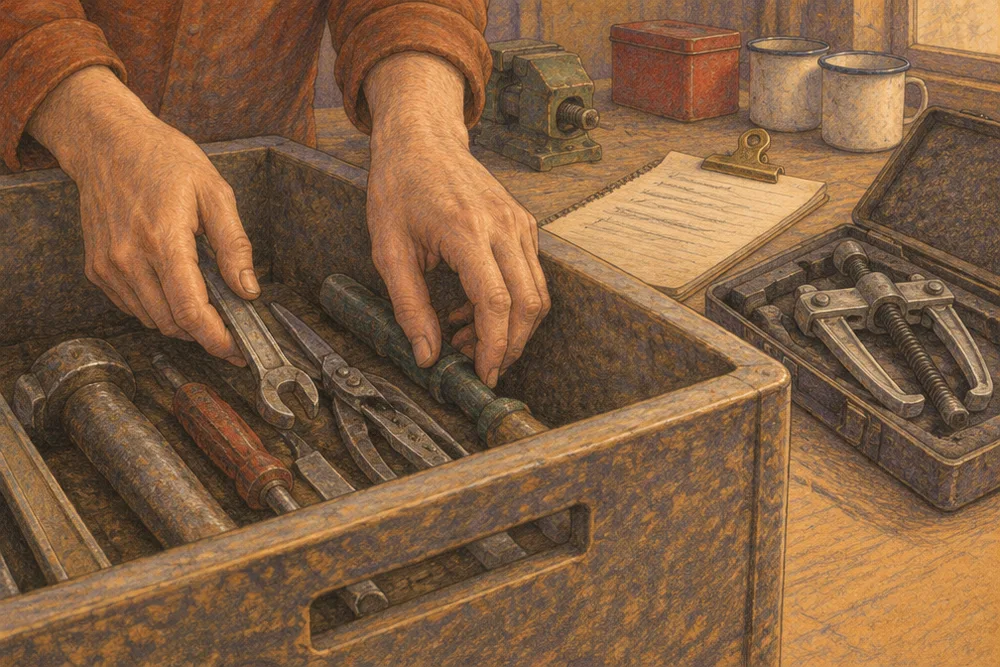
She began sorting her kit. The puller she had borrowed went back in its case. The compact vice stayed. She made a list of tools that could travel in one crate, then crossed out two she could borrow by the hour. Every subtraction felt like being reduced until she understood it as a boundary she had chosen.
At the end of the shift, she locked the ferry stores and checked the engine room twice. She did not take the company’s spare parts home. The rule mattered more now, not less. If she was going to build a business, she wanted to know which things were hers before she had to explain them to anyone else.