Where the Last Ferry Waits
Page 115 of 218
Chapters
“All right,” the woman said, and picked up the case.
Pippa wiped a little ridge of sail grit off the bench with the side of her hand. The deckhand lowered the tray into the clear space. A crescent on the underside of the control was still wet where it had lain against the locker wall. She tore two lengths off the paper roll and gave him one. He picked up the coil while she slipped the paper beneath it. They didn’t need to talk to do that much together.
“Where did you see water first?” she asked.
He showed her with a finger along the lip of the tray. The locker had been damp behind the hinge, not at the bottom. That made a difference to where she would look. She took the brass-clipped pencil from her coveralls and wrote the location on a strip of masking tape for the tray. She left room for the time and asked him for it. He gave her the time he’d opened the locker, not when he thought it had got wet.
“I’ll leave this here to dry,” she said. “Tell them where it is before you go.”
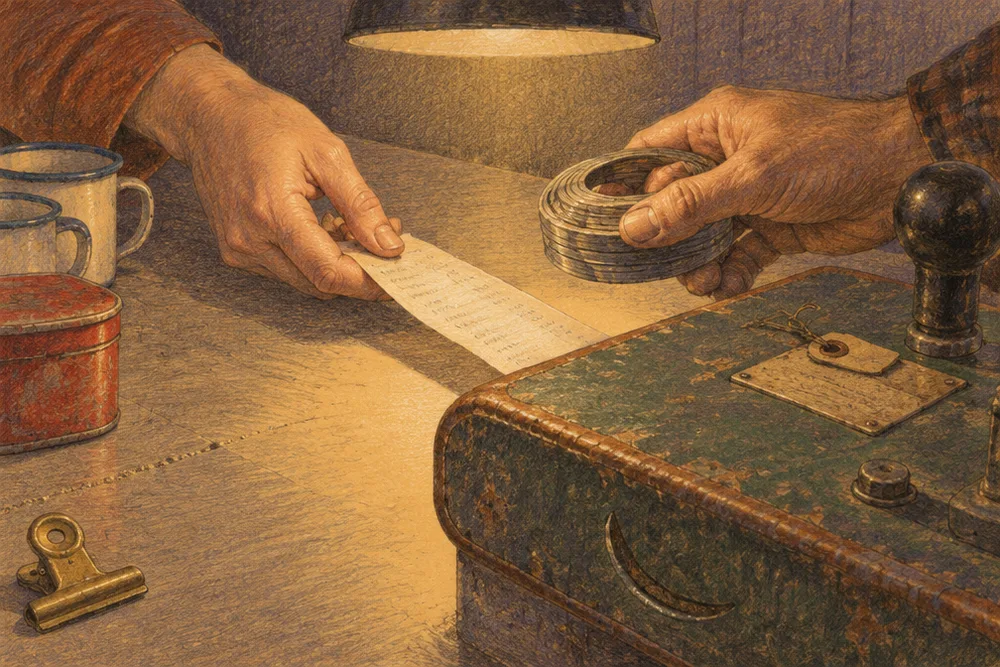
He read the tape upside down. “Will do.”
The woman had put her machine down again, this time between her boots. She was counting out notes onto the corner of the bench. She looked from the tray to the narrow dry strip that was left. “Where do you want it?”
Pippa held out her hand. The notes were warm and creased from the woman’s purse. She counted back the change and found her little duplicate book in the tote. The receipt had a line for an address which she usually left empty. She could hardly put Plover Quay on it and have people come looking for her with machines she hadn’t agreed to see.
“Just the number’s fine,” the woman said. “It’s only so I can put it through the books.”
Pippa wrote the number and the price, with the pedal and the labour on separate lines. There was less in the second line than she’d spent on the job if she counted the two times she’d cleared the bench and set it up again. She had quoted it that way because she knew what people were prepared to pay to fix an old machine. It was hard to tell, from one job done in pieces, what she could afford to charge.