Where the Flood Left Ink
Page 220 of 262
Chapters
Winifred read carefully. She said there would be less fuel per household at first than the old list had led people to expect. She said the rules did not determine rent, and the rent record would not decide eligibility for coal. When she finished, no one asked her to soften it.
“Now the witnesses,” Martha said. “Two, rotating. Not a pair fixed over the whole Fold.” She proposed that a household could ask for two people to attend its allocation, and that no one should witness a neighbor’s case alone if the neighbor objected. She did not offer herself as permanent judge; she offered to help arrange the first visits.
One subscriber wondered whether a rotation would mean witnesses who knew nothing of the houses. “A stranger may miss what matters.”
“A familiar face may decide it knows too much,” Isaac said.
Martha nodded once. “A household can tell us who they trust. If no one is trusted, no one goes in. We can ask from the threshold.”
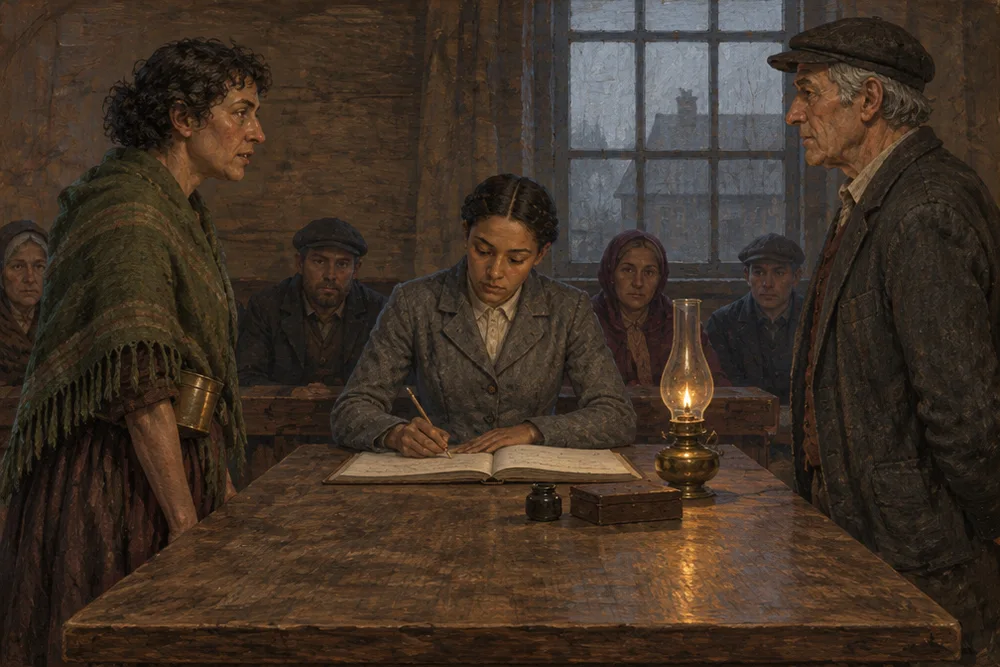
Agnes asked the subscribers whether they would authorize two rotating witnesses for disputed allocations, chosen with the household’s consent. The vote was less divided this time, but not effortless. A few people abstained. The yeses were enough. Winifred noted that the witnesses could observe and report a dispute, not promise coal beyond the stock.
“And if people laugh at a family for asking?” someone said. The question came from a tenant who had barely spoken all day. “You can make rules in here, but the lane keeps its own rules.”
Martha looked across the room. “Then the people who laugh can explain why they think a cold house is a joke.”
A low, uneasy sound moved through the benches. It was not quite laughter. Winifred recognized the danger in Martha’s answer: a brave sentence could make a target of the person it meant to defend. She began to say that the records would protect the household, then stopped. Records could show what had been decided. They could not prevent every neighbor’s cruelty.