Where the Flood Left Ink
Chapter 12 · Both Rolls on the Table
Page 154 of 262
Chapters
The Long Vestry had been aired since dawn, but the flood had left its smell in the stone: river mud, wet wool, and the sour edge of soaked paper. Winifred Keld stood at the end of the table where the light from the high windows fell short. She had chosen the place deliberately. From there she could see the tenants on the benches and the trustees behind their table without having to turn her back on either.
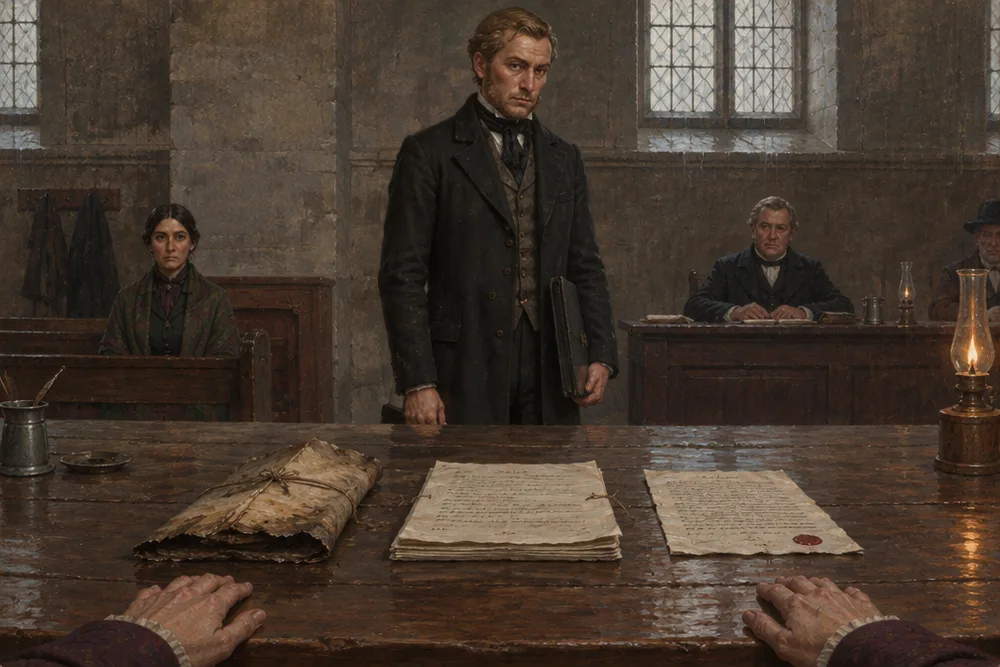
The damaged rent roll lay under its cotton ties, its bottom corner buckled upward. Beside it rested her fair copy, square-edged and ruled in a hand she had made smaller than usual so that sums and notes might sit together. Ursula Fenwick’s signed statement was between the two. The old woman sat with her hip against the wall, earth-red apron folded over her knees, the bone folder tucked into its pocket. She had not touched the documents since entering.
Silas Clegg set his flat document case on the table and opened it. He had locked his knees as if the floor might otherwise give way. “Before we call the tenants, Miss Keld, I need your certification. The estate cannot act on a paper you won’t stand behind.”
“I have stood behind the copying,” Winifred said. “I won’t certify a balance until the people whose names are in it have had the chance to answer.”
Clegg’s right eyebrow rose a little higher than his left. “The hearing is to determine the rent due. Not to hear every history of the Fold.”
“Then the rent due can wait through the history that changes it.”
Agnes Bellwray adjusted the key on its braid where it lay against her plum cuff. She had called the hearing and could order the parish to hear a claim, but the room knew what she could not do: she could not bind the estate to a figure or command the subscribers to open their coal store. Her chin stayed tucked as she looked from Winifred to Clegg.
“Miss Keld, have you a schedule of what you can establish?”
Winifred drew a sheet from beneath her copy. It separated the entries into three columns: credits matched to receipts and delivery records; shares still disputed; sums she could not yet alter. She had not written a final total at the bottom. “This is what the papers support so far. It is not a certification of the whole roll.”
“And the old figures?” Agnes asked.
“Some were entered as arrears when coal was received against rent. Some may be true arrears. The two kinds cannot be told apart by looking at the old column.”