Where the Flood Left Ink
Page 22 of 262
Chapters
When the group began to move again, it did so more slowly. A few people turned toward town in pairs, their talk following them out of the gate. One stopped to read Clegg’s schedule again, then traced the words “possession proceedings” with a gloved finger without touching the paper. Winifred watched him go and tried not to mistake attention for trust.
Ned came from the weighhouse, wiping one palm on his blue smock. “You’ve put your name up,” he said.
“They’ll need to know where to bring things.”
“Clegg’s put the estate’s name under yours.” His eyes moved from one notice to the other. “He means them to see what’s at stake.”
“They ought to see it.”
Ned cradled his injured wrist at his waist. “The board goes back before the next weighing.”
“I’ll have it there.” She untied it from the post. The cord left a shallow mark in the wood, and a fleck of chalk had smudged onto her cuff. The marks on the board’s working side remained undisturbed, protected against her jacket.
“I didn’t lend it to make a speech,” he said.
“No. You lent it to let people know what might help.”
He looked as though he might object, then gave a small shrug. “That’s a speech too, when you write it big enough.” He returned to the scale. Winifred felt the edge of the board shift in her arms and tightened her hold.
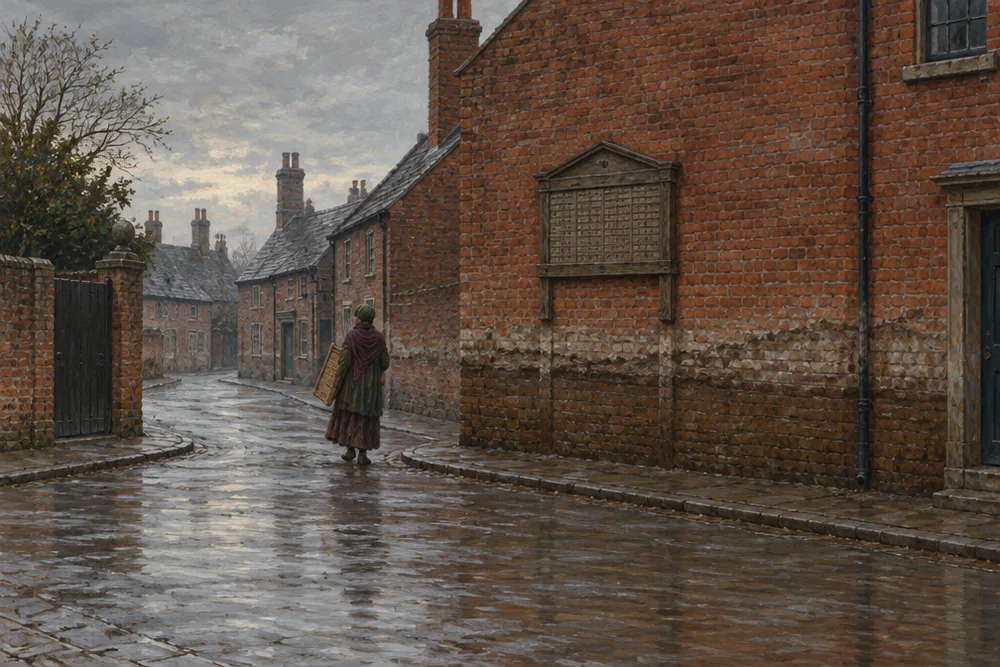
She carried it back along the lane, passing the dry upper gate and then the lower streets where the flood had left a thin, gray film on the stones. At the Fold turn, an old man called after her to ask whether receipts from the previous winter counted. She said they did, if they concerned the rent at issue. He gave no promise that he would bring one. Another woman asked the same question from a doorway, and Winifred answered again.
By the time she reached the bindery, her arms ached and the board’s chipped corner had rubbed a dark streak on her jacket. The sign had not been taken down. From the lane she could still read its blunt words, and below them Clegg’s warning of what an unresolved balance might cost.
Ursula was at the bindery window with the rent roll open before her. She had set small weights at the edges of the softened leaves, taking care not to press the buckled corner. The raking daylight found the raised fibers and made the water damage look like a map of narrow streams. Her earth-red apron was dusted with paste, and the bone folder lay beside her right hand.