Where the Flood Left Ink
Page 207 of 262
Chapters
Clegg shifted his case closer. “That is not the same as a complete account.”
“No,” Winifred said. “It is a complete account of what we know.”
Agnes nodded once, not quite a blessing, and turned to the subscribers. “Then we must decide whether we are willing to make a rule that does not depend on the arrears column.”
The subscribers spoke among themselves. Their voices stayed low, but the small room did not keep anything private. One feared that a separate list would be too slow. Another said the old one had always been ready when a delivery came. A third asked whether the reserve stock could be held for a household missed on the first route. No one proposed that the coal itself be divided equally; there was not enough to make equality by measure mean sufficiency by need.
“If we stop using arrears,” the woman by the window said, “we have to know how to decide who is first.”
“Ask each house,” Isaac said again. This time he addressed her directly. “You don’t have to ask them to tell the room. Send someone to the door. Ask what they can use. Ask what they have now.”
“And if they tell us nothing?”
“Then you do not know. You don’t make up an answer from a rent mark.”
The woman considered that. She had not agreed, but she no longer looked at Isaac as if he had offered an impossible kindness. Hales asked how many visits the subscribers could manage, and Agnes said a first round could be smaller if the households judged the fuel by what they needed rather than by a fixed share. That was only a proposal so far, but it gave the argument a shape beyond the old list.
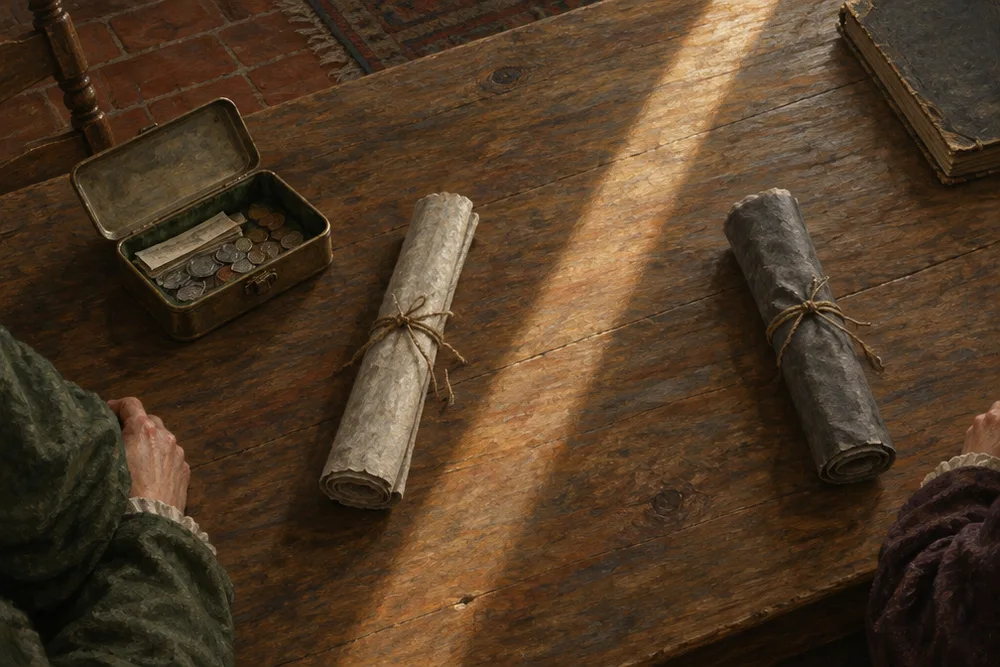
Winifred did not write it down. The subscribers had not decided, and a draft in her hand might turn into a rule before the people who owned the stock had given it. Instead she pulled the fair roll a little closer and checked that the disputed-share schedule remained beneath it. Two separate matters. One room, one afternoon, and no lawful reason to let the ink mingle them.
Martha sat again, leaving the tin at her side rather than hiding it in her lap. Isaac stayed forward on the bench. The subscribers were still discussing quantities, visits, and who could bear the work. The old list had not yet been replaced. But the people it served, and the people it failed, were no longer being treated as marks on the same page.