Where the Flood Left Ink
Page 187 of 262
Chapters
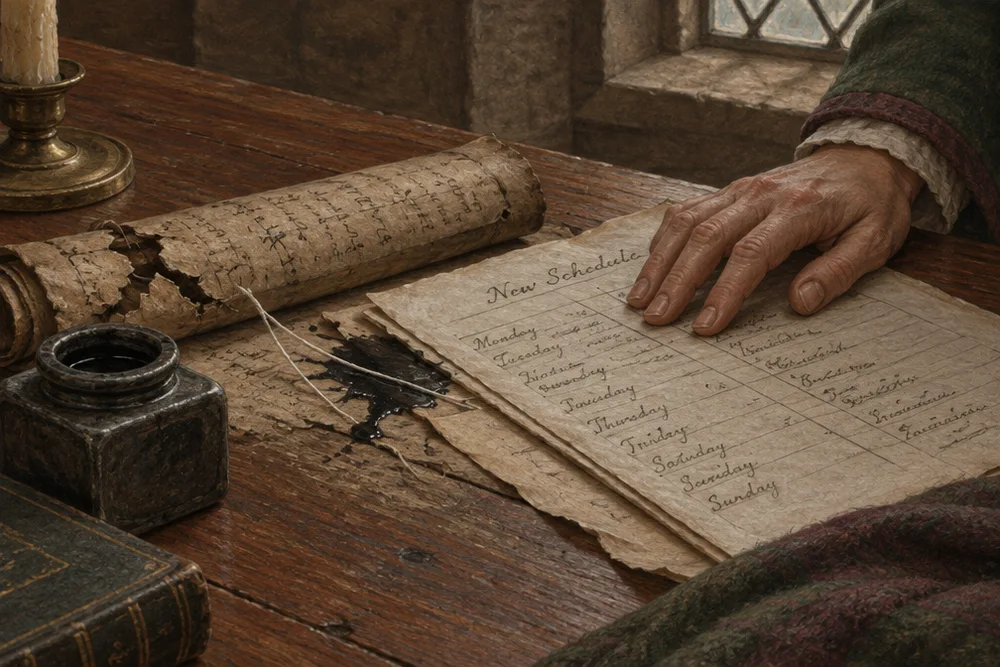
“No one has asked you to promise more,” Agnes replied. She had one hand on the new schedule and one on the old roll, keeping the papers from shifting under the draft. “We have asked you not to send a family out while the parish is still finding out what happened.”
Clegg’s right eyebrow rose. “The hold is conditional.”
“So is everything they have been asked to trust,” Martha said. She did not raise her voice, but several people nodded. “We’ll bring the witnesses we can. You’ll bring the account your office can show. If there’s a name missing, don’t call the space proof.”
For a moment Clegg seemed about to answer her. Then he placed the cap back on his pen and put the signed hold into Winifred’s hand. “Keep the original with the parish. I will take a copy. If the trustees alter a figure, send it to me.”
Winifred looked at the form. “And if a tenant disputes a figure?”
“They may submit the evidence.”
“Directly?”
“To the agent’s office, or through the parish.” He spoke as if the choice were no great matter. Winifred wrote both routes into the minutes. A tenant should not have to ask someone else to carry a challenge that concerned their own door.
As she wrote, the white thread on her pencil slipped loose and fell onto the paper. She did not notice until it caught against the wet edge of the hold. When she lifted the pencil, the thread came away, a tiny pale mark left across Clegg’s signature. She brushed at it, then stopped before her finger smeared the ink.
Ursula leaned forward. “Leave it,” she said. “The signature is legible.”
Winifred left it. There had been too much repairing of marks that were meant to be seen. She copied the date and terms into the parish minutes, then read the wording back to the room. Clegg corrected one phrase: referrals were held, not the estate’s claim. Winifred changed it on the parish copy and marked the correction. He watched her do so and gave no further objection.
The tenants had gained time, not a final answer. The agent had gained an account that did not pretend uncertainty was payment. Agnes had secured an agreement she had power to call for, but not one she could enforce against every hardship that waited beyond the vestry door.
Agnes drew the two rolls toward herself and set the new schedule between them. “We will keep the damaged original and the fair copy together,” she said. “Neither is to be used alone as the final account until the inquiry is complete.”