Where the Flood Left Ink
Page 124 of 262
Chapters
She did not ask him whether the entries were true. The signature and the exact limit of the statement mattered more than a reassurance offered at the hatch. She folded the paper along its existing crease, then placed it in the dry cloth with her fair roll.
Outside, the wage queue had thinned. A few workers stood near the gate, talking with their collars up against the damp wind. Winifred found Ned below the board. He was checking a chalked weight with the split tally peg tucked between his fingers. She waited until he had finished, not wanting to make the men on shift watch him answer her.
“They gave the statement,” she said when he came over. “Dates and totals. It says the batches were credited to the heating account.”
Ned took the sheet by its edge. He read the heading first, then the dates. His lips formed the numbers without sound. When he reached the final total, he looked at the mill board through the window.
“These dates line up with the delivery shifts,” he said. “I remember the late October batch. The board was already chalked when the second cart came through, and we had to put its weight on the lower margin.”
“Does this total match what you remember?”
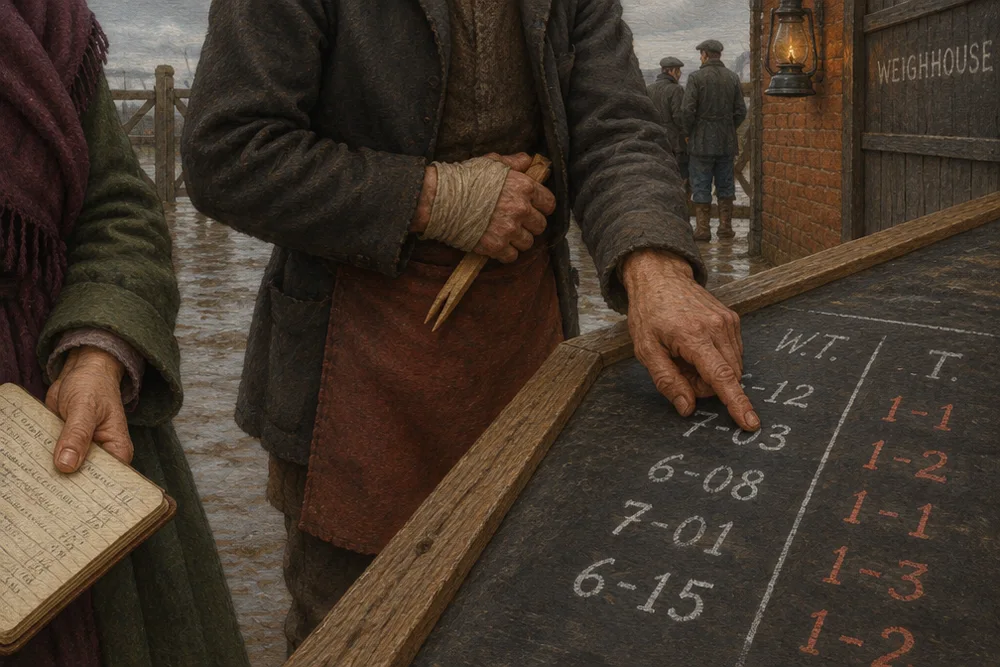
“I remember loads, not sums.” He handed the sheet back. “If you show it at the hearing, I can explain how a delivery went from the scale to a batch. I can say what I saw on my shift. I can’t make the extract into a list of who took how much home.”
“I will not ask you to.”
“And I won’t take it from the mill. You can bring it yourself.” His fingers curled around the split peg. “If they ask me about the office entries, I’ll say I didn’t see them. If they ask about the board and the weighing, I’ll answer that.”
“That is enough.”
“It may be enough to show the coal passed through the mill. It won’t tell you whose basket it was.” Ned lowered his head again, this time not to avoid her but to return to his work. “That’s still for the houses to say.”
Winifred walked back to the bindery with the extract held inside her jacket, away from the mist. The mill had provided independent corroboration: its own account said the parish had received the credit. But the figure on the sheet belonged to the mill’s batches, not to the households whose rent balances she had to write. A batch could be a neighbor’s share, several rooms’ shares, or a delivery carried by someone who owed nothing at all.