Where the Flood Left Ink
Page 109 of 262
Chapters
“I can do that.”
“Not because you’ve made a shorter list,” Martha said. “Because you’ve asked.”
Winifred drew a clean sheet from the drying rack and placed it on the table. “Tell me what you remember. I’ll read each line back before I keep it.”
Martha named the day, the shift, and the mill entrance where the basket had been handed off. She remembered the coal as three separate household shares grouped for the walk to Alder Fold. She could identify her own share by its receipt and by the part she had carried. The other portions had been assigned before she took the basket, she said, and she could name the households only if they chose to confirm them.
Winifred wrote without rounding the sum. Where Martha could give a date, she put the date. Where she described a division but could not show how many pieces belonged to each family, Winifred wrote “share not individually counted.”
Martha stopped her at the word “delivered.” “I saw it leave the weighhouse. I saw it reach my door. I didn’t watch it go to the other two.”
Winifred scraped away the last word and replaced it with “carried from the weighhouse.” She read the full statement aloud. Martha listened, chin tucked, feet planted wide. When Winifred finished, Martha corrected a shift number. Winifred changed it.
“That is what I can say,” Martha said. “I’ll sign it. I will not sign the petition.”
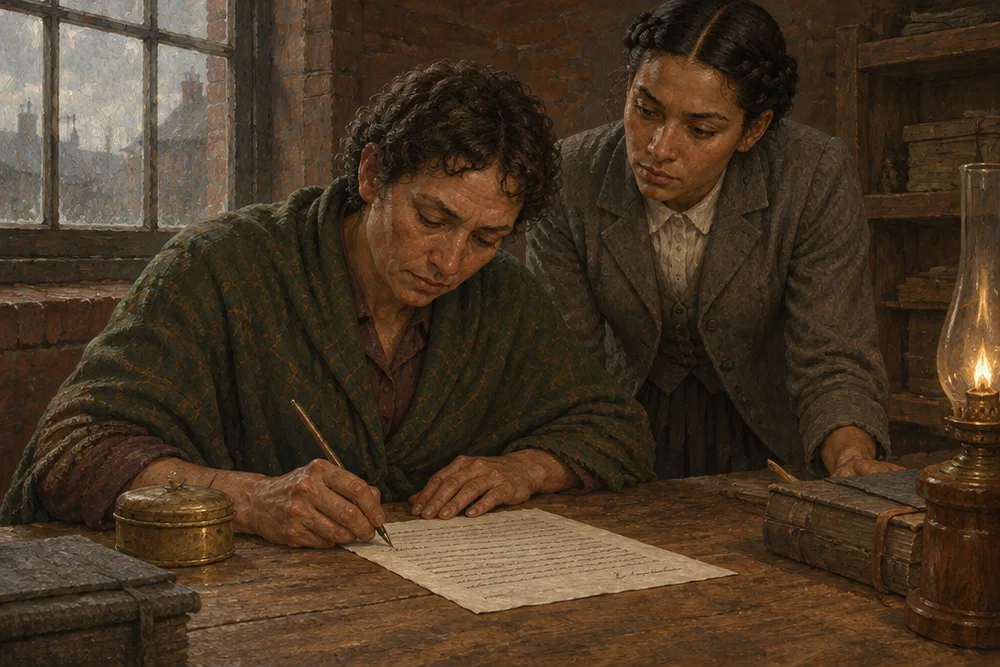
Winifred offered the sheet for her inspection. Martha checked the words again and signed at the bottom. Her name was firm and small. Winifred did not attach it to the common petition or copy it into the fair roll. The statement belonged to the witness until she allowed it to be used.
Martha put the receipt back in her tin. “I’ll bring it to the vestry if you tell me who’s going to hear me.”
“Agnes can call the hearing. She cannot promise what Clegg will accept.”
“Then tell me that too.”
“I will,” Winifred said. “And I’ll tell you what the agent says before you decide whether to take the receipt there.”
Martha closed the tin. “That’s fair enough for now.”
It was not forgiveness, but it was a working arrangement. Winifred felt the difference. She had thought of trust as something granted once, a door opened or kept shut. Martha treated it as something that had to be checked at each step.
After Martha left, Ursula read the statement. “You could have made a cleaner sentence by saying she delivered three shares.”