What the Water Left Blank
Page 59 of 158
Chapters
“That sounds like a feast.”
“You can decide after you taste it.” She opened the door but did not step through. “Come up. No work. We can talk about something else, or not talk.”
The offer was more direct this time. He felt the pull of it, along with the old instinct to ask what it meant, what it would cost, whether accepting would turn a kindness into an obligation. Instead, he made himself answer the question she had actually asked.
“I’d like to.”
The guesthouse stairs smelled faintly of soap and old wood. He followed her up one flight, keeping a respectful distance when she stopped to unlock the room. Inside, she lit a small lamp on a desk. Her room was simple: a narrow bed, a coat hung over the chair, a suitcase open by the wall. A paper bag of bread sat on the desk beside a tin of tea.
“There,” she said. “Not entirely plain.”
“You’ve prepared for guests.”
“I’ve prepared for being hungry.” She took out a squat glass jar with a handwritten label and set it beside a wedge of cheese wrapped in paper.
He sat where she pointed, on the chair that held her coat. She moved the coat to the bed and found two plates in a cupboard. Neither of them mentioned that the plates did not match.
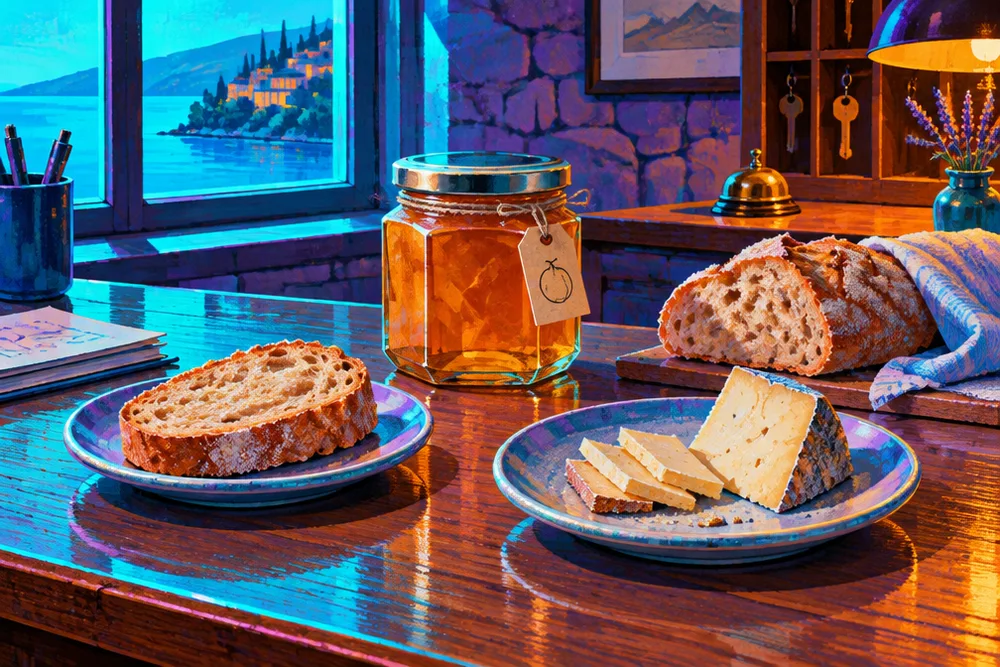
They ate in the pool of lamplight. The bread was dense at the heel and soft through the middle. The quince preserve tasted tart, then sweet, and left a grainy trace on his tongue. Merrin watched his face as he tried it.
“Good?”
“Good.”
“You can say you don’t like it.”
“I do like it.” He passed the jar back. “It’s not too sweet.”
She looked pleased, though she hid it by cutting another slice.
They talked about the museum at first, because it was there between them even when they promised not to work. Merrin described the old shop as she remembered it: the bell that gave a double chime, the worn strip in the floor where customers waited, the way her mother could reach a loaf with one hand while weighing flour with the other.
“I remember the smell,” she said. “The stone was always cold in winter. There was a little shelf by the window for the rolls she’d set aside for people who came late.”
Levan listened. He could picture a room from the way a person moved through it, and Merrin’s memories had the practical detail of someone who had actually stood behind the counter. She spoke of customers’ habits, not the shop’s importance. That made the absence on the model feel more like a missing room than an empty patch of street.