What the Water Left Blank
Page 128 of 158
Chapters
Merrin stood beside the drawer. A folded sheet of acid-free paper lay inside for the first visitor’s memory, along with a pencil tied on with cotton cord. It looked almost too small to hold the disagreements Tamsin expected, but no drawer could be large enough to contain every remembered version of a street. It did not have to settle them. It only had to let them be kept.
“We should put the explanation on the drawer front,” Tamsin said. She brought over a proof. “People need to understand that a memory isn’t being rejected just because it isn’t painted into the model.”
Levan read the line and made a small mark at the margin. “I can fit this under the title. ‘Accounts are preserved here when they cannot be independently placed.’”
“That’s clear,” Merrin said. “Could it also say that people should include whether they saw something themselves or heard it later?”
Tamsin smiled, the gap between her teeth visible. “It could. That distinction matters as much as the address.”
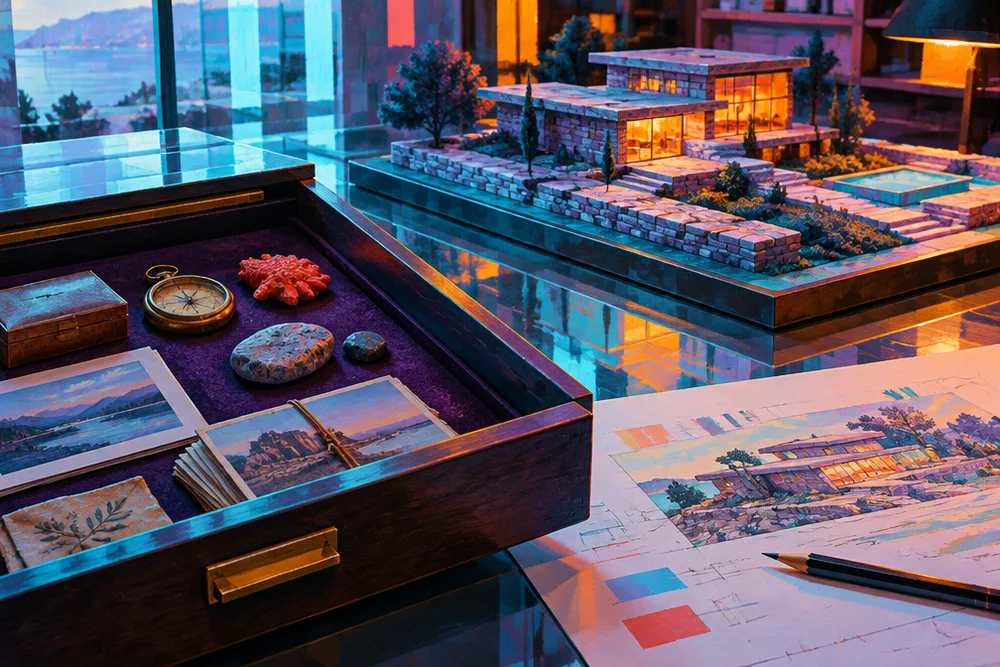
Levan wrote a second line on the proof, then held it out for Merrin to read. She liked the plainness. No invitation to vote, no promise that every recollection would change the model. The drawer was not an appeal court; it was a place to keep what the painted streets could not responsibly carry.
The workroom door opened. Tamsin’s assistant arrived with the final print proofs in a flat folder. Merrin checked the names carefully: Ada Prowse. Nessa Corin. Mill Street. The punctuation in Nessa’s credit had survived. There was no unnamed neighbor, no generous friend, no bakery that had supposedly crossed the lane intact.
She signed the proof at the bottom. Tamsin took it for production. Levan slipped the approved label layout into its protective sleeve, and the little card with No. 11 on it rested in its proper place at last—not as the answer to No. 4, and not as a correction to Merrin’s mother’s life, but as a fact with its own boundary.
For a moment, no one spoke. The model sat between them, a valley made small enough to hold and honest enough not to claim it had held everything. Beyond the museum windows, the evening gathered over the upper road. The lower town would be closed to visitors tomorrow, and after that the street would no longer be theirs to walk.
“I’ll prepare the final files tonight,” Levan said. “The labels can go under glass first thing.”