What the Gauge Left Out
Chapter 6 · The Floor That Falls Inland
Page 67 of 259
Chapters
At six, Fenna read the harbor level from the upper screen, copied the figure into the day sheet, and left the pencil point resting beside it. The number looked ordinary. It had looked ordinary yesterday too, and the day before, though yesterday the station had acquired a second gauge and a flood-night log that disagreed with the official record by enough to make “ordinary” a word she no longer trusted.
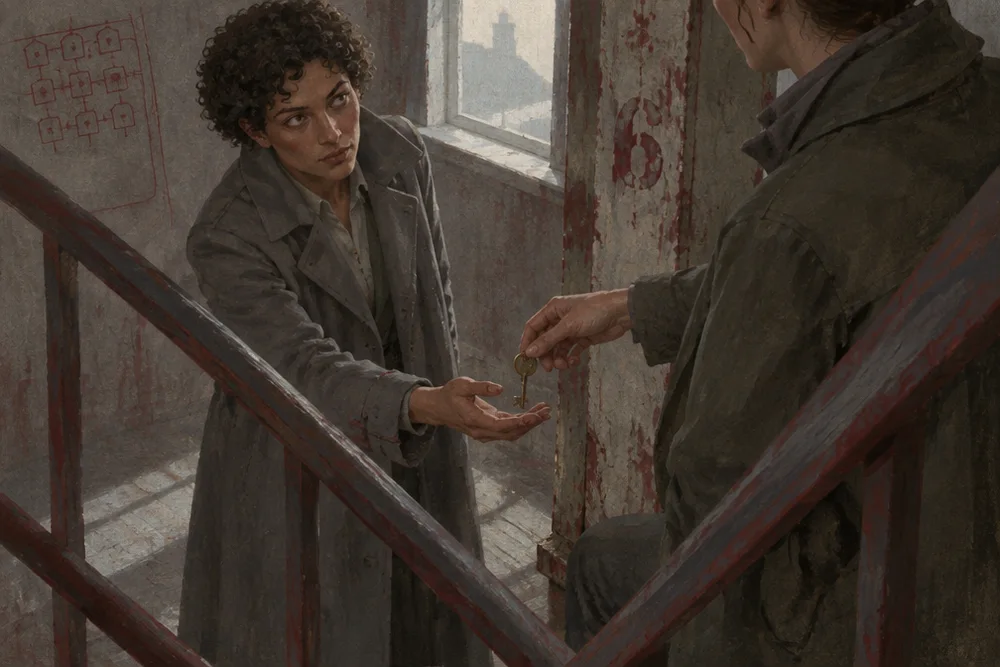
She shut the screen cabinet and took the steel stairs down. Elspeth was waiting at the painted post, feet planted wide on the landing, brass key hanging from one hand. The chipped six showed through several coats of paint. Fenna checked the level against the mark, then glanced up through the narrow window to where she had been standing moments ago. Their instruments shared a datum. That much was settled. Everything else had started coming loose.
“You’ve got your coat on,” Elspeth said. “That means you’re going somewhere.”
“Fold Terminal.”
Elspeth’s broad hands closed around the key. “Bera agreed to an escorted visit. She didn’t agree to you treating a slope as proof of a flood.”
“I’m not.” Fenna tucked her cranberry pencil into her cuff. “I’m looking at the conversion sheets.”
“And if there’s nothing in them?”
“Then I’ll write that down.”
Her mother held the key for a second longer than necessary, as if it were a test with a correct answer neither of them had been told. Then she passed it across. “Bring it back before the afternoon run.”
The first ferry was already loading when Fenna crossed the quay. Fish-packers in rubber aprons moved crates along the wet boards; two dialysis patients waited under the terminal canopy with a driver who kept checking his watch. The crossing had always been a timetable to most people. Since the audit began, Fenna had started seeing the time between a boat’s arrival and its departure as a physical part of the town: one that could be narrowed, blocked, or bought.
Fold Terminal stood on land where the old ferry basin had been filled in. Its concrete face was long and nearly windowless, with the public entrance funneling passengers toward the ramp. A cooperative notice beside the door listed the first outbound crossing and the fares. Below it, a small sign directed staff to the service bay. Fenna had seen the public plan. It stopped at the terminal wall, as if the building simply ended there.
Bera Sedge waited inside the entrance in a charcoal tunic, cream fare ledger tucked against her ribs. Her chin stayed level as she looked Fenna over. “You’re early.”
“I didn’t want to hold up the loading.”