What the Gauge Left Out
Page 233 of 259
Chapters
The relief administration had chosen the natural-flood classification to release cabins quickly. That choice had supplied immediate shelter but had also shaped the permanent claims process, where ownership displaced occupancy as the measure of a household. The station reporting had entered a peak Elspeth had not observed and certified it as the maximum harbor level.
The chair was careful to say the findings remained preliminary. Responsibility would be considered separately, and the panel had not decided what harms the settlement would recognize. No one should treat the account as a final ruling on individual compensation.
Elspeth listened without looking at Bera. The three failures were spoken in separate sentences. She had wanted a single sentence for four years, one that would say she had done a bad thing for a good reason and leave the people she had tried to help better off. The panel offered no such sentence.
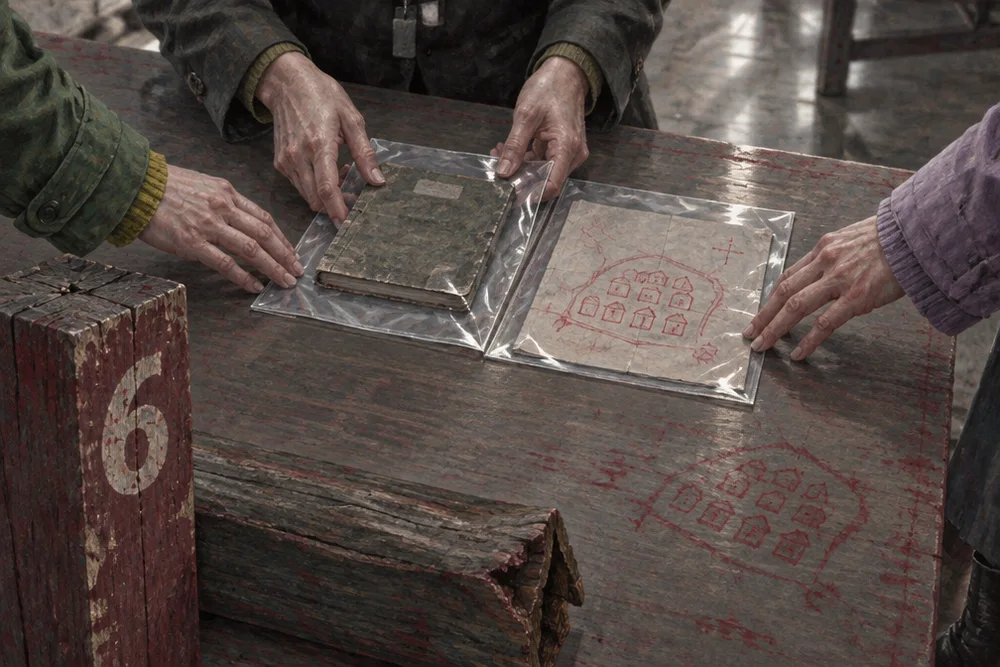
A clerk placed the public notebook sleeve beside the signed return. The warped lower corner of the log lifted slightly where the plastic did not lie flat. Elspeth took her hands off the table so no one could mistake her for keeping it in place.
The chair asked whether Elspeth wanted the notebook entered into the public file in full. The address references inside it were few; the gauge entries were not. She could request redactions for private information, but not for the reading or the time. Elspeth said she wanted the full gauge record preserved beside the return. If a private address needed protection, the clerk could mark that line without hiding the measurement.
The clerk wrote the instruction down. Fenna watched as the note was attached. There was no nod between them. There did not need to be.
Outside, the first ferry sounded from the harbor. Its horn rolled through the high windows and seemed to pause over the room. Lettle Reach had never stopped moving while the inquiry examined its old choices. The crossing carried fish-packers out and dialysis patients back. The cooperative had kept to its schedule through every hearing so far.
Elspeth knew what Bera would say if asked again: people depended on that boat, and she had made a choice to bring it in. Elspeth knew what she would say: people depended on the cabins, and she had made a choice to get them opened. Neither need erased the water, the false return, or the households left off the permanent list.
The panel adjourned the testimony. Elspeth stepped aside to let Siv and Orla reach the clerk’s table. Siv’s separate request went into one folder. Orla’s went into another. Neither woman waited for the other to speak first.