What the Gauge Left Out
Page 143 of 259
Chapters
Fenna did not add to it. The route map did not settle who had moved the barrier, what Bera had intended, or what Elspeth had traded for immediate access to the cabins. It could not show whether a different relief decision would have been made if the low reading had been accepted. It showed the consequence of the water’s path, and made the missing questions harder to avoid.
When Fenna left for the station, the map remained on the board where residents could read it.
At 15:46, Fenna reached the Weight Room registry with a copy of the public map and a packet of restricted materials. She had not yet filed the audit; that would come tomorrow, with the receipt and the records that could place knowledge in order. But the cooperative’s posted account was already circulating, and the residents had chosen to contest it without surrendering their names.
She tucked the public map into the folder marked for posting and kept the panel copy separate. A note on the cover listed every withheld location, every restricted statement, and the one photograph authorized for the panel but not for publication. The note did not conceal the limits. It made them visible without telling strangers who had imposed them.
At the registry desk, the clerk checked the map’s label and asked whether Fenna had authority to represent all nine households.
“No,” Fenna said. “I have individual permissions for the material inside. The public copy represents no household as a whole.”
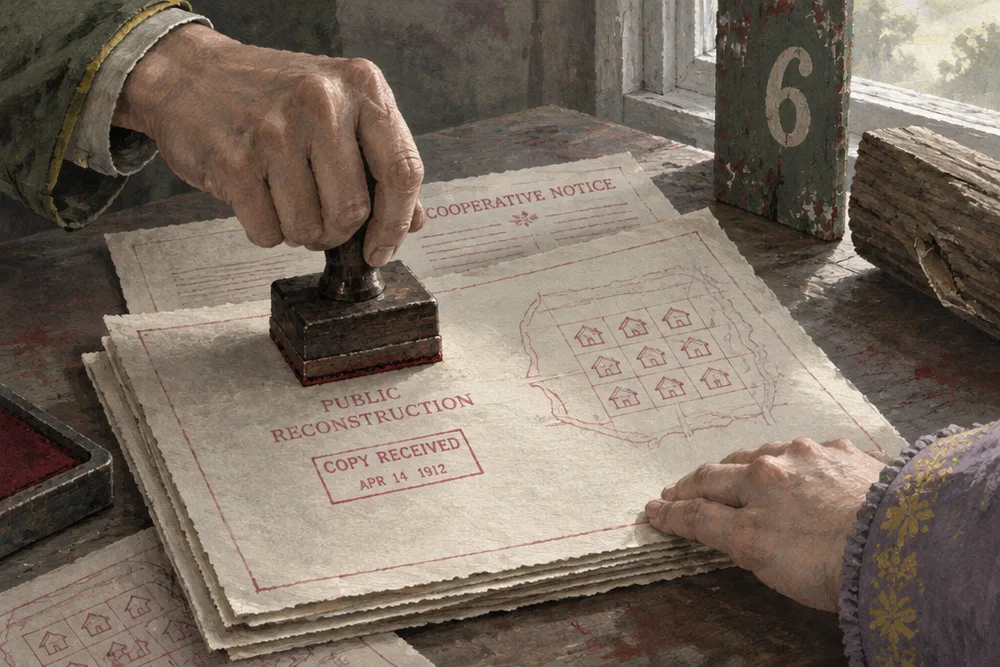
The clerk nodded and stamped the copy received for the public file. The stamp did not reopen the inquiry or determine the evidence. It only recorded what had arrived, and when. Fenna watched the ink settle into the paper before she took the map back.
Outside, afternoon light spread across the street-facing glass. The cooperative’s notice and its signature remained where they had been. Fenna’s posted map would not replace it. It would stand beside it, with a dashed line instead of a confident explanation and with blanks that were acknowledged rather than exploited.
She returned to the terminal as the four o’clock closing time drew close. Bera was at the fare desk, the crossing ledger open. Elspeth waited at the far end of the office, one hand resting on the counter. Fenna set the map copy down beside the notice and let the clerk pin it below the cooperative’s statement.
The account in the window was no longer the only page people could see. It was not the whole line. But the residents had chosen what it could show, and what it must leave out.