What the Bell Owes
Page 77 of 210
Chapters
“They’re relevant if drawings are part of the proposed payment.” Vale’s voice stayed level. “I’m not assessing anyone’s intentions. I’m checking what went in and what went out.”
Merrin watched Nessa’s jaw set. “We can bring them tomorrow,” she said.
Nessa looked at her. The look was neither agreement nor refusal. Then she closed the ledger carefully, aligning the cover with the page edges. “Tomorrow,” she said.
Vale packed the slips into her case. Before leaving, she gave Merrin an itemized estimate. Merrin paid the initial fee from her own account and asked for a receipt.
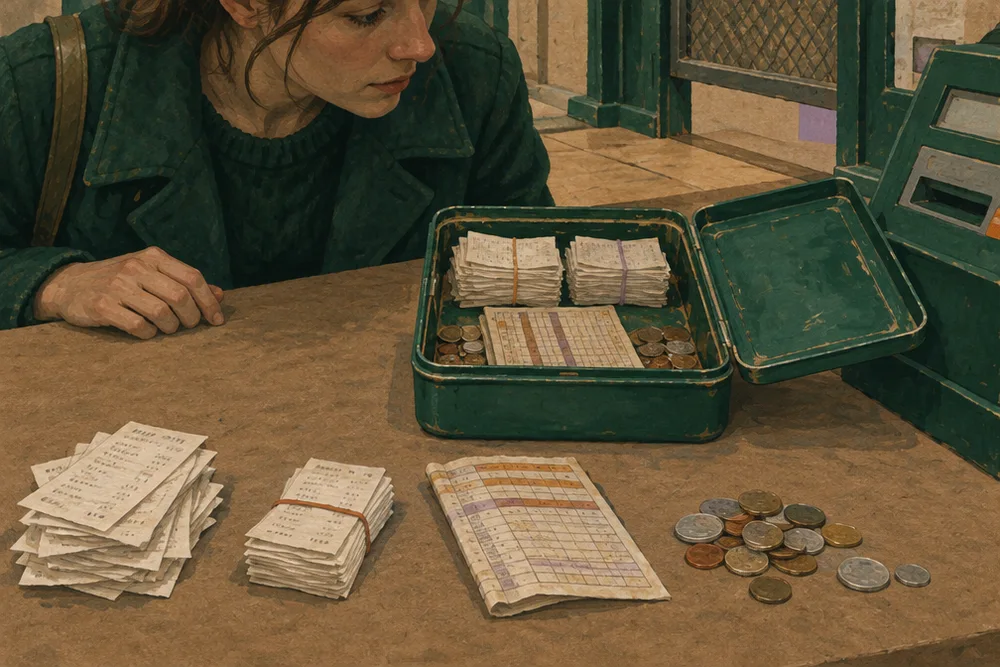
The next day the tin was on the counter when Merrin arrived. Nessa had set it beside the ticket machine, where the hatch would make it difficult to discuss anything privately. The lid came off with a dry squeal. Inside were bundles of receipts held together with elastic, an old fare chart, and a handful of coins that had worked into the corners.
Vale spent the morning matching withdrawals to the dates in the ledger. Merrin helped find the receipts; Nessa fetched the ones in the back of the tin. None of them spoke much. When Vale asked a question, Nessa answered if she could. If she couldn’t, she said so. Merrin began to hear how much depended on details no one had thought worth keeping: whether a payment had been cash or bread, whether a borrowed hand had lasted a whole shift or only until the first commuter run, whether “Merrin on deck” meant Merrin had been aboard or that someone had been told to cover her.
“I wrote the names I knew,” Nessa said once, after Vale set a receipt aside. “Sometimes that was the person who kept the service going.”
Vale didn’t look up. “That may explain the entry. It doesn’t establish who did the work.”
Nessa’s mouth tightened. “I know that now.”
Merrin wrote the words on her own pad, not as evidence but because she wanted to remember the sound of her mother saying them. There had been years in which Nessa’s arrangements had been what kept the ferry running: a loaf for a morning clean, an extra crossing for a neighbor, a daughter filling in because the only other relief skipper cost more than the day’s fares. The arrangement had worked. It had also made the cost disappear.