What the Bell Owes
Page 62 of 210
Chapters
“No one asked you to say that.”
“They will.”
Merrin placed the envelopes in a shallow wooden tray near the hatch. She did not put a name on it. Then she wrote a notice explaining that accounts would be reviewed by someone outside the family and that no one’s claim would be entered as settled until it had been checked. She added that the district service fund could not be used for historical wages. That part would disappoint people, but leaving it out would only defer the disappointment.
“Do you want the ledger open?” Nessa asked.
“Not for people to handle. They can ask to see the entries with names covered.”
Nessa nodded once. The promise she had made on the boat had become a box, a notice, and a new set of limits. It was less dramatic than the bell. It was also harder to evade.
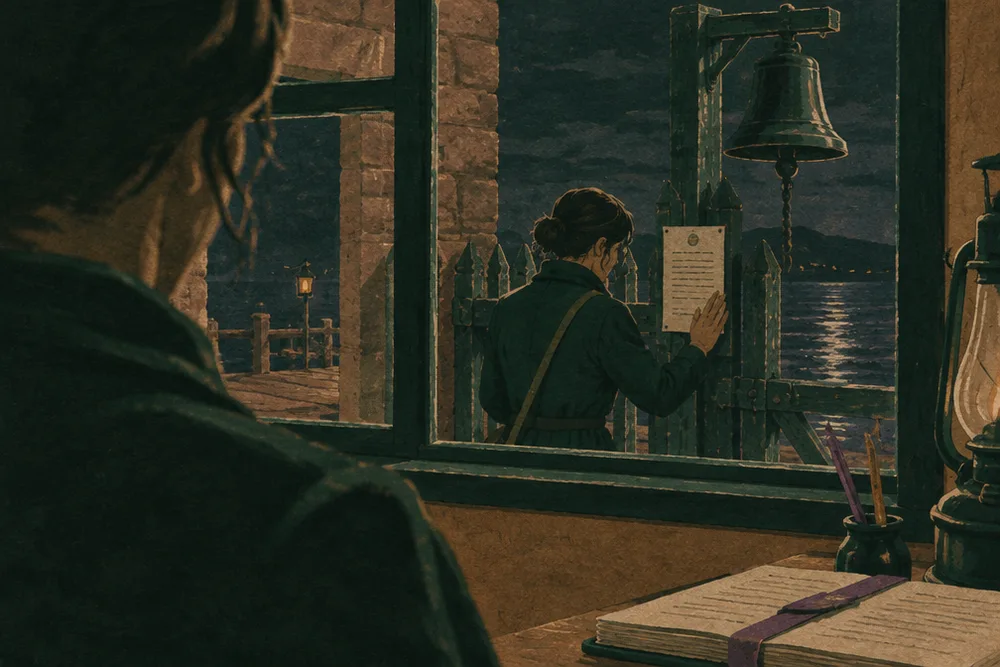
By the time they finished, night had drawn dark water beyond the office window. Nessa took the notice to the gate and fixed it where passengers could read it before boarding. Merrin checked the wording one last time. There was no promise of a particular amount, no claim that the book could tell them everything, and no suggestion that a favor had settled a wage.
The Tern’s bell hung still at the stern. Its pale thumbprint caught the office light.
Merrin set the covered page in the ledger and left the empty envelopes in their tray. “Tomorrow,” she said, “I’ll ask the bookkeeper about checking dates.”
“I’ll call in the morning,” Nessa said. “Not before the first run.”
“All right.”
For once, Merrin did not volunteer to take the call, cover a shift, or make the next part easier by pretending it belonged to her. She locked the Ticket Room, and Nessa kept the key. The papers remained inside, available to be read but not exposed to anyone who had not agreed to be named.
The next day, a worker could take an envelope, write down a remembered shift, and leave without explaining why it had gone unrecorded. Someone might decide the effort was not worth it. Someone else might find a date the ledger could confirm. The ferry would keep crossing either way, carrying its passengers over the short stretch of water and the long detour around the bridge.
Merrin walked home with her workshop dates still in her pocket. They were no longer proof that her Saturdays belonged to her. They were a question she would have to answer after the claims had names, totals, and a cost.