What the Bell Owes
Page 181 of 210
Chapters
“That works.” She did not ask whether he could cover the gap before then. She did not ask him to keep the time open just in case. She carried the ledger inside the gate, where it belonged.
Idris walked along the quay toward the bus stop. The crossing would leave at its posted hour, and the second task would stay on the list. His correction had not made him responsible for repairing every shift the ferry had once hidden. He had no wish to speak for every worker who had worked without a proper record. The sign-up envelopes and the bookkeeper’s table gave them other ways to be heard, if they chose to use them.
He passed the bakery windows, where the late light caught the floury glass. The envelope pressed lightly against his ribs with each step. Behind him, the Tern’s bell remained still. He did not need to hear it ring to know what he had asked for.
At the bus stop, Idris took the statement out once more. The corrected line sat beneath his name, split into the two shifts it had been. The total matched the transfer advice in the envelope. He checked it from the beginning, not because he doubted the bookkeeper, but because it was his account and he had the right to know what it said.
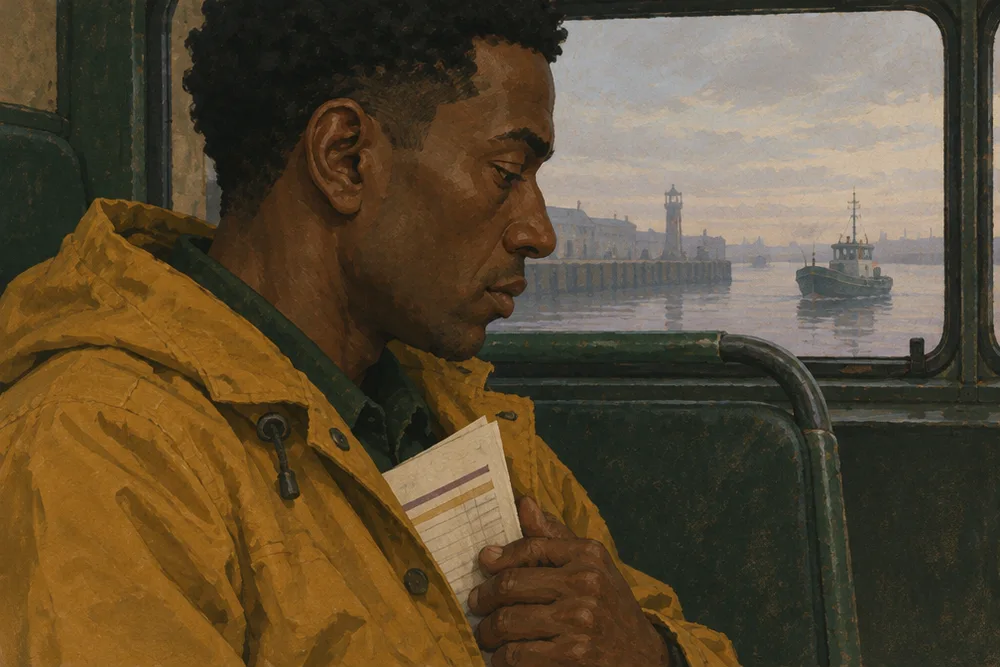
A bus sighed to the curb. He folded the paper carefully and put it away. The doors opened; two passengers stepped off with shopping bags, and the driver waited while a child climbed the steps. Idris moved aside to let them pass before he boarded.
There would be another installment. There would be another statement to check. The balance remained visible, not buried under a promise that all the help had been freely given. He could leave the ferry work when the agreement ended, or take another shift if the terms suited him. Neither choice required him to be grateful for wages already earned.
The bus pulled out past the quay. Through the window he could see the stern gate, the small gleam of brass by the rail, and Nessa at the ticket-room entrance, one hand resting on the ledger. She had not called him back to finish the mud seam. The next worker would find the task written down, separate from Idris’s shift.
He turned toward the window and let the quay slide out of view. The money had not settled every old account. It had done something more exact: one wrong line was now corrected, and the next job would not be mistaken for the one he had already finished.