Three Bells Below the Salt
Page 197 of 249
Chapters
The carpenter’s estimate was not a guess. Tessa read it again as the afternoon faded, standing in the warehouse doorway while a thin shadow crossed the broken rudder. The blade needed two new braces, a fitted hinge pin, and a length of seasoned timber broad enough to take the steering strain. The ferry could not safely run on a patched split. No one had found a spare rudder at the east landing, and the nearest suitable timber lay beyond the flooded cut.
The families had no tools except what they had carried out. Some had money, but not enough to build a house; others had neither money nor belongings left to sell. The ferry authority had a little reserve, but its accounts already carried the rescue costs, the lost packet fare, and the damage to the warehouse. Luz could release land. She could not make boards grow out of the salt.
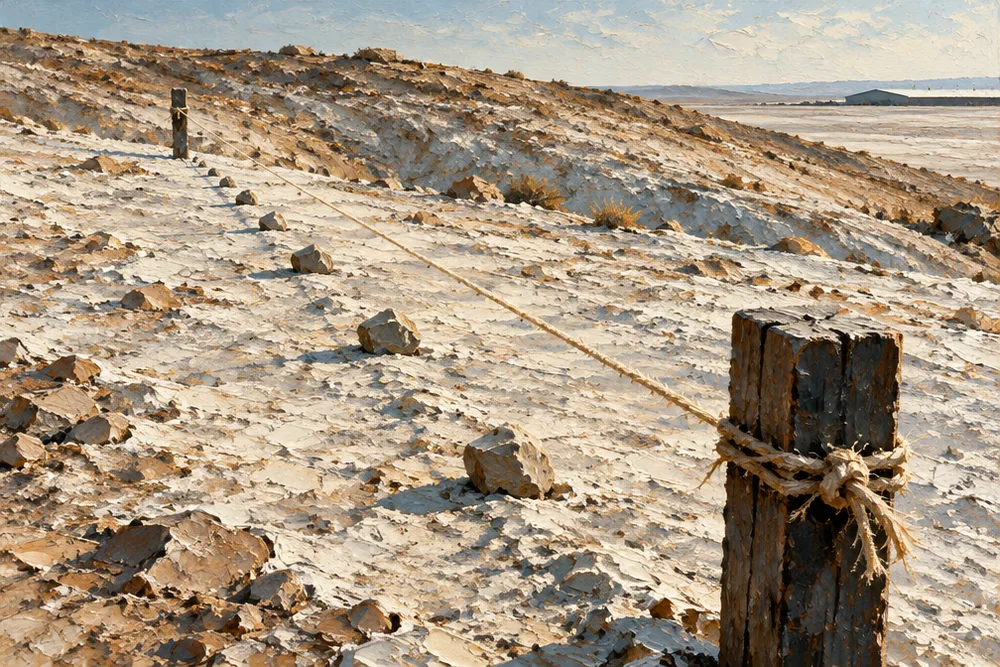
Tessa found Neri on the ridge shoulder, marking the drainage swale with stones. A coil of string ran between two stakes; the line slanted gently west. Neri had removed his waistcoat and tied it around his waist, leaving his patched shirt dark at the back with sweat.
“Luz signed,” Tessa said.
“She agreed?”
“To survey the lots and issue direct leases. Not tied to jobs. Renewable, and the land can’t be reclaimed for storage.”
Neri stopped setting a stone. “That’s a door.”
“It’s a piece of ground with lines around it.”
“Most doors start that way.” He looked down at the cistern yard, where the warehouse roof threw a long shadow over bedding and cooking pots. “People will be glad. They’ll also ask when they can build.”
“They can’t build without timber.”
“There’s timber at the east landing.”
“There’s a flooded cut between here and there.”
“There’s a ridge route, too.”
Tessa knew the route. It ran over a narrow saddle on the dry ridge, steep in places, and the old pack bridge there had already sagged under the first rescue loads. The timber might be hauled around by hand, but each beam would demand a dozen backs and hours of work. Even then, there would not be enough for all the houses and a rudder.
The choices pressed against one another, both necessary, neither willing to wait. A ferry that could not steer would strand the basin again. Homes without roofs would turn the warehouse into a permanent camp. She could not tell which need to put first without making the other a debt.
“We need to find more timber,” Tessa said.