The Widow Window on the Landing
Page 92 of 224
Chapters
Aster looked toward the stair. The lamp was still one tread above the foot. It would descend once for every name she crossed off, and only when it reached the bottom would the bearer gain a single crossing. The inventory had made the movement predictable. The handover would make it dangerous.
She closed her notebook. On the first page of the house schedule, beside the list of names, she wrote in block letters: NO FURTHER DEPARTURES WITHOUT VERIFIED RECEIPT.
It was not enough to save anyone. It was a beginning she could put her signature beneath.
That night the house settled in its usual sequence: a pipe clicked, the old staircase creaked under its own weight, and wind pushed at the street door. Aster sat at the lodge table with the receipt, the map and her notebook arranged in a row. Her boots were wet from the yard. The cracked umbrella leaned beside her chair, one rib split and its new crescent dent visible in the wood.
She copied the map once more, leaving space for a second mark. Beside the loading door she wrote: object may hold threshold if custody disputed. Beneath it: person requires living receiver. Beneath that: receipt must acknowledge custody, not settlement.
The last line troubled her most. She had no standard form for it. The municipal records annex had carbon copies, but the owner controlled the handover sheets. Suri might know how to amend a receipt. Aster would have to ask her. Until then, any crossing was a risk she could not justify.
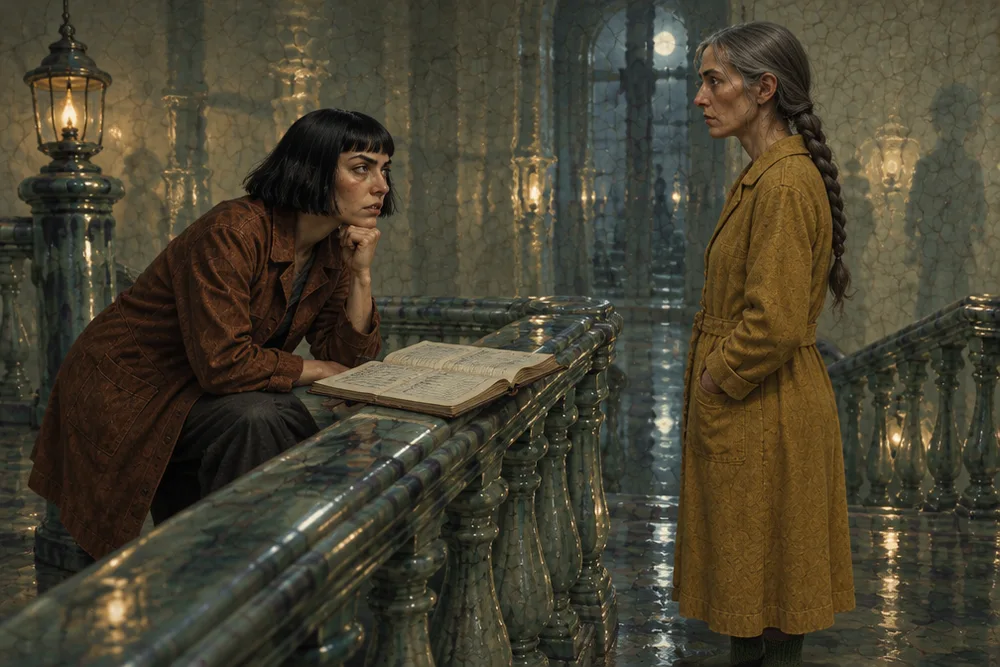
A soft scrape came from the landing above. She took the notebook and climbed. The lamp on the other stair had not moved. Nella stood in her housecoat near the pane, the paper stacks put away. The gray braid lay down her back. She held the chalk in one hand and the lamp in the other.