The Widow Window on the Landing
Page 58 of 224
Chapters
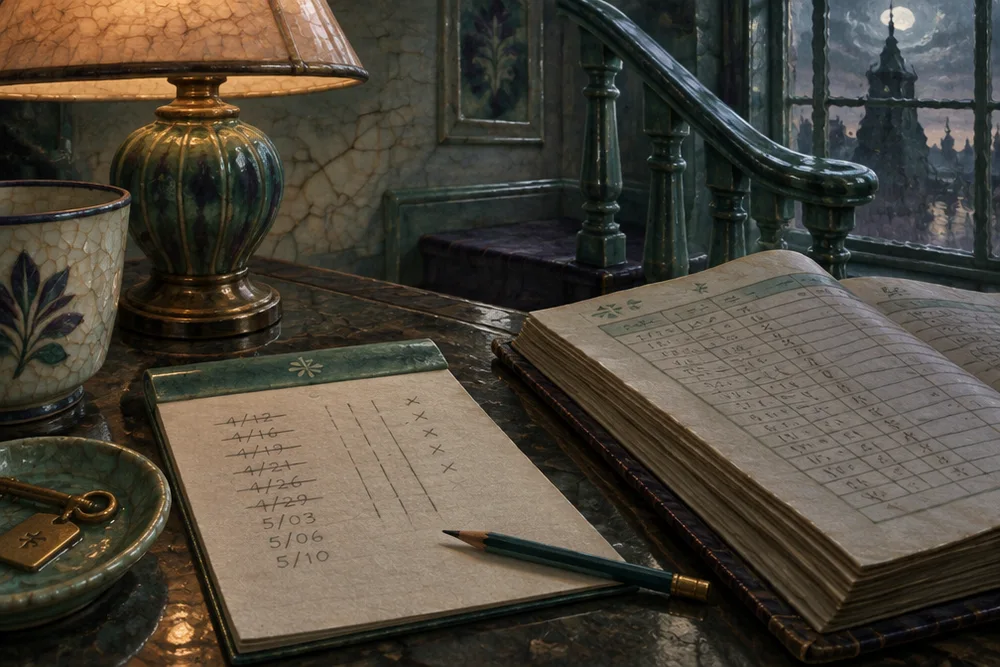
Iven went to the cabinet beneath the lodge window. It stood crooked on the tide-green tile, a squat thing with a warped door that caught at the bottom. He tugged it open, muttered, and pulled out a flat envelope tied with string. The papers inside had gone soft at the edges. He set them down as if they might stain him.
The rent book was a narrow ledger, its cloth spine rubbed nearly white. Aster found Nella’s room number—six—then ran her finger down the ruled column. The final rent payment had been entered on the first of October. Beside it, in Iven’s handwriting, was a note: key surrendered, room vacated. The date was the third.
“Why the third?” she asked. “If she left on the first.”
“She stayed a little.”
“Then it wasn’t vacated on the first.”
“The owner wanted the books clear.”
Aster turned the ledger so he could see the empty column. “You entered the rent. You entered the key. What happened between them?”
Iven reached to take the book. She moved it out of reach, not sharply, just enough. His fingers closed on air.
“There was a dispute,” he said. “She had fallen behind.”
“The rent was paid.”
“Not all of it.”
Aster checked the sums. There was a balance, but it was small—less than the cost of a week’s lodging, and crossed through with a line so faint it might have been accidental. In the margin, an entry dated the second read: deposit applied to balance. The next day’s receipt listed a new lock for the upstairs gallery.
“You used her deposit to pay the balance,” Aster said. “Then changed the lock.”
“The owner had ordered it.”
“Did you tell Nella?”
Iven’s mouth tightened. “I told her she had until the morning to go.”
“And when she didn’t?”
He looked toward the hall. The glass there caught the pale shape of his face, stretched slightly at the cheek. “I had the key.”
Aster wrote the dates on her pad: first, rent paid; second, deposit applied and lock changed; third, room marked vacated. She drew a line between the second and third, then stopped. The sequence was clear. The consequence was not. She needed the original receipt, not an inference that could be brushed aside later as a contractor’s opinion.
“Where’s the lockout order?” she asked.
“There wasn’t one in writing.”
“Then the receipt.”
“What receipt?”
“You signed that Nella received her effects. If she never collected them, what were you acknowledging?”