The Widow Window on the Landing
Page 143 of 224
Chapters
Another line appeared beneath it: LOCKOUT MAY BE SHARED. ROOM LIST STAYS MINE.
“Understood,” Aster said. She wrote the boundary in the margin of her working notes, not in the owner’s ledger. “The lockout is shareable. Her room inventory is not.”
Iven leaned close to the window, his face warped at the cheek by the cracked glaze. “Nella,” he said, though she could not hear him. “I’m sorry.”
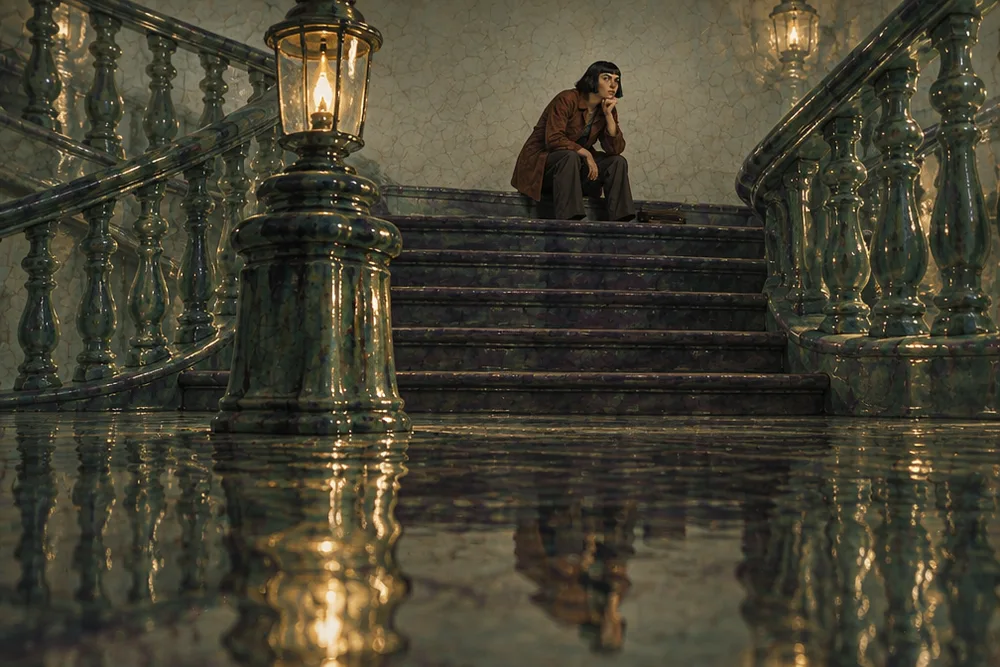
Nothing appeared. No refusal, no forgiveness, no mark at all. The lamp’s flame held steady in the reflected stair. Aster understood that silence was not an empty space she could fill with an answer. She turned back to the ledger and wrote, in her own hand, that acknowledgment had been made in the presence of the witness, with a formal statement and signature still required.
“Will you sign now?” she asked.
Iven looked from the note to the blank line. “Not while she’s looking.”
Aster lowered her pencil. “You asked to speak to her.”
“I did. I didn’t say I could do it in front of her.”
Aster closed the ledger again. She could feel anger rising, sharp and useful, but she refused to spend it on a man who had finally named what he had done. Naming it did not absolve him. Nor did it make him ready to be seen doing so.
“Then we stop here,” she said. “You can decide whether you’ll make the formal statement before the handover. I’m not carrying a private version to the owner.”
“And if I don’t?”
“The record will show that you refused to sign.”
“That’s not fair.”
“It’s accurate.”
He rubbed the heel of his palm over one eye. “You’d let them take her again just to keep a clean record?”
“No.” Aster’s voice stayed level. “I’m not letting them take her. I’m telling you that I won’t help you hide how she was taken the first time.”
Iven glanced at the window. “You think the right words will open the door.”
“No. I think the wrong words helped close it.”
He let the chalk fall. It struck the sill and split into two white pieces.
Aster picked them up and set them beside the ledger. The gesture was small and, for her, deliberate: nothing went missing just because it had broken. She had once counted an entire apartment’s worth of furniture by the marks on a client’s duplicate sheet. Later, the client had denied receiving the inventory, and the signature had been challenged as forged. The details had blurred with time; the sound of the impound lot chain on her van had not. A signature could help establish where custody lay, but it could not make a claim disappear without leaving a mark somewhere.