The Well That Borrowed Thunder
Page 6 of 7
Chapters
Tovin released the rope. He stepped aside, leaving space beside Yara instead of taking the place at the well’s head. She lowered the bucket until its dented foot touched the trembling surface. The first note rang low. The second answered high.
A woman near the millstream pressed both hands to her mouth. “I told my brother not to climb the roof,” she whispered. An old man spoke of a laugh he had wanted to hear once more. Someone else said nothing at all, but bent over their cupped hands as if warming them. Each voice the well returned belonged to the person who had lost it. Yara did not call on anyone, or tell them what to say. She held the rope steady while they listened to themselves.
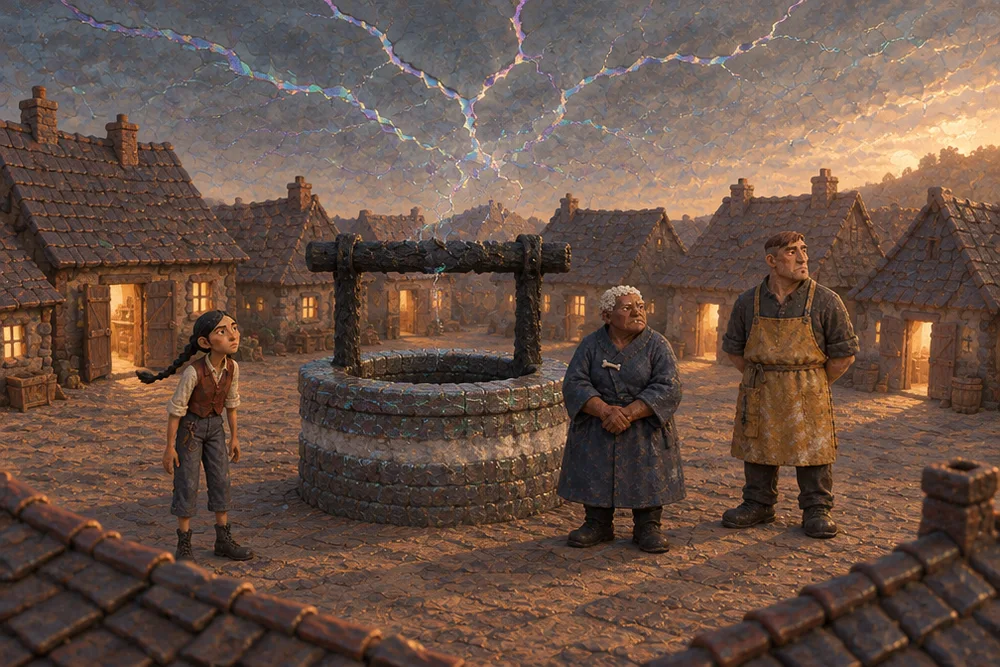
More voices rose, some clear, some blurred by years. A dead grandmother’s sharp scold. A father’s unfinished apology. The words crowded the common, then fell away one by one—not answered, not corrected. The villagers stood quiet because they chose to hear, not because the well had stolen their reply. Above them, the freed thunder gathered in branching, dark threads around the crossbar.
Mera’s hand found the edge of the curb. “I still want quiet,” she said. “I want a room where I can sleep. And I want you to stay through the storm.”
Yara looked at the open doors, at the people who had carried different bargains all their lives. “We can want quiet,” she said. “We don’t have to lend away our voices to get it.”
No one volunteered to make a new promise. Tovin lowered his head, then nodded. Mera did not argue. Yara tipped the bucket mouth-up. Thunder slid into it without a splash, filling the copper with a weight that made her arms strain. The sky drew it back. Its branching sound lifted past the rooftops, and the well’s silver skin sank until the shaft was dark and dry again.
The first daylight storm broke over the bowl. Thunder rolled across the paving, through the lanes, and into every house. Shutters rattled. A child cried, then laughed at the sound of their own crying. Yara flinched at the first crack. Mera stood close enough for their sleeves to touch, and neither of them pretended the noise was small.