The Weight of Low Water
Page 196 of 240
Chapters
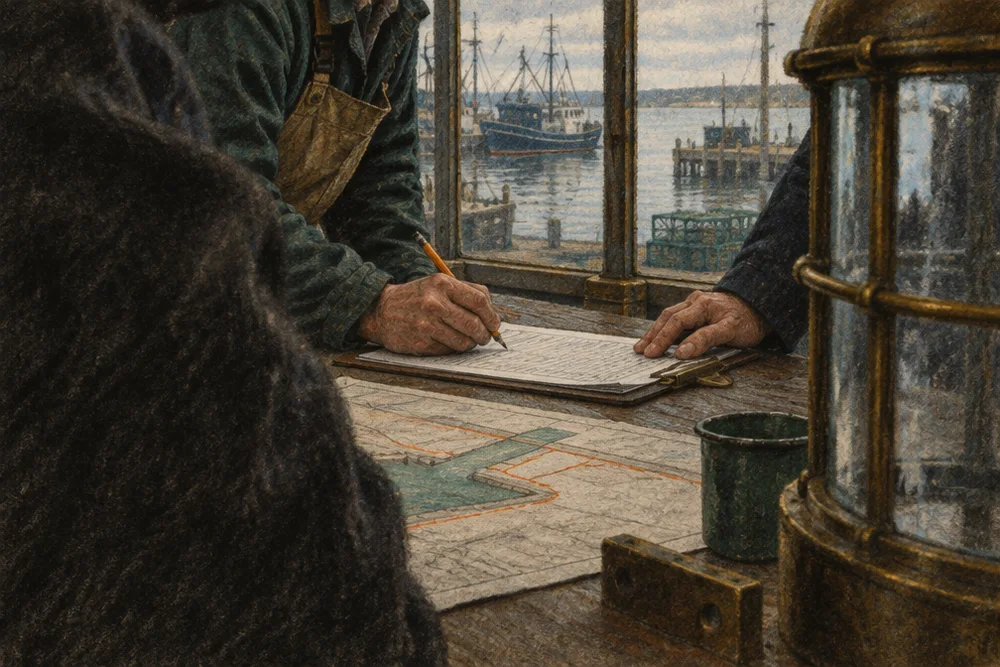
Una set the marked apron plan on the table. The talk stopped. “The authority will license the Bell Cage and this access strip if the crews’ fee covers the operating cost. The apron plan keeps the depot trucks turning without taking the weighing route.”
Nell leaned over the drawing. “Does it keep the door clear when a truck’s on the berth?”
“That’s the point of the separate lane.”
“And if the lane gets blocked?”
“You can refuse to weigh until it’s clear,” Una said. It sounded blunt. She meant it to.
A skipper tapped the proposed boundary with a blunt finger. “I’m not paying for a route if the depot decides it can park there.”
“The license will say the lane stays open for the weighing service,” Una said. “If it doesn’t, the authority can enforce it.”
“Can they?”
No one answered immediately. The harbor authority had been willing to let the family own the building and the crews improvise around it for years. A clause on paper would not move a truck by itself. Una thought of the false entries she had once copied because the figures matched. A record could be accurate in its narrowest sense and still fail the people who relied on it.
“We’ll put the complaint process in the license,” the surveyor said. “And the fee schedule needs a reserve for repainting and small repairs. The crews can review the charges each quarter.”
Nell nodded once. “That’s workable. No one’s promising the depot will be kind. We’re paying to have our own ticket.”
One by one, the skippers gave their names and the number of shifts they expected to use. They disagreed over the likely volume. One crew wanted a lower fee for quiet months; another wanted a minimum contribution so the station would still open when they needed it. Bess kept the discussion on shifts actually worked. Una wrote each commitment in the margin of the plan, then checked the figures aloud.
When they had finished, the sum was not comfortable, but it reached the operating budget the authority had asked for. The fees would pay for scheduled weighing, receipts, and upkeep of the marked route. They would not pay to repair the weighhouse roof. That bill belonged to whoever owned the building.
The surveyor checked the total and drew a box around it. “If the authority accepts these figures, the license can cover the hut and the apron lane. The crews will need to keep their own records of fees and shifts.”