The Weight of Low Water
Page 195 of 240
Chapters
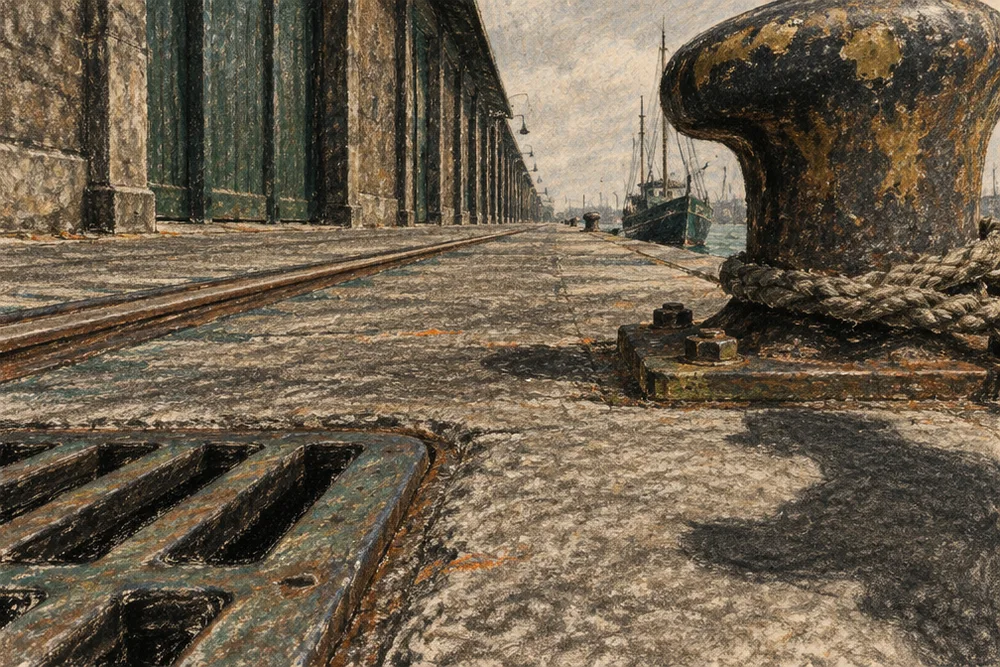
The surveyor asked them to walk the route. Una went first, from the berth to the apron’s outer edge, then along the painted line to the weighhouse door. She paused at the turn where the two uses came closest. There, the path narrowed between a drain cover and a battered bollard. A person carrying a crate could get through sideways. A pallet could not.
“No powered pallet truck through here,” she said. “Hand-carried catch only, and no waiting on the lane.”
“That’s a restriction,” the surveyor said.
“It’s the width of the strip.”
Bess set the weights down on the sill and joined them. “The crews already know how to carry a crate. We need a place to set it down while the ticket’s being made.”
Una looked through the doorway at the platform scale and the empty space beside it. The weighing equipment would leave with the family, but the building still had room for a table and a dry place to put a crate. “A marked waiting square inside the entrance. One at a time. Nothing stored in the lane.”
The surveyor wrote it down. He did not promise the authority would accept the arrangement. He said the license would need a plan with clear dimensions and a budget that covered maintenance. Una knew those were not ceremonial requirements. A route that depended on a faded line and somebody’s good intentions would be gone by the first busy morning.
“We can paint it again,” Bess said.
“And charge enough to keep it painted,” Una replied.
At the Bell Cage, the crews had gathered around a folding table, their coats still damp from work. The signal hut’s glazed sides made the harbor look close and divided into panes: masts, slate water, the wall, and the walk Una had just measured. A receipt book lay open beside Nell Cott’s chalk-marked list of names. Nell stood with one shoulder angled toward the door, listening while two skippers counted on their fingers.
“If we pay a fee for each ticket, it has to be the same fee for everyone,” one skipper said. “Not a different charge because somebody brings in three boxes.”
“One receipt, one charge,” Nell said. “If you have three separate weights, you get three receipts.”
“And if the station has no customers for a week?”
“Then we still pay for the shifts we use,” Bess said. “Not for shifts we don’t.” She took a chair but did not sit. The brass weights remained under her arm, as if she had brought proof of what a weighing service actually required.