The Sound of Staying Put
Page 89 of 206
Chapters
While the drum ran, the woman sat beside the second pillowcase and phoned the shop. She asked somebody to clear the rack, then listened for a while. “No, the clean ones. Put those by my chair.” She hung up and tucked the phone under her thigh. She had a soft groove across two fingers where the handles of her scissors rested. Every so often she pressed the pad of her thumb into it.
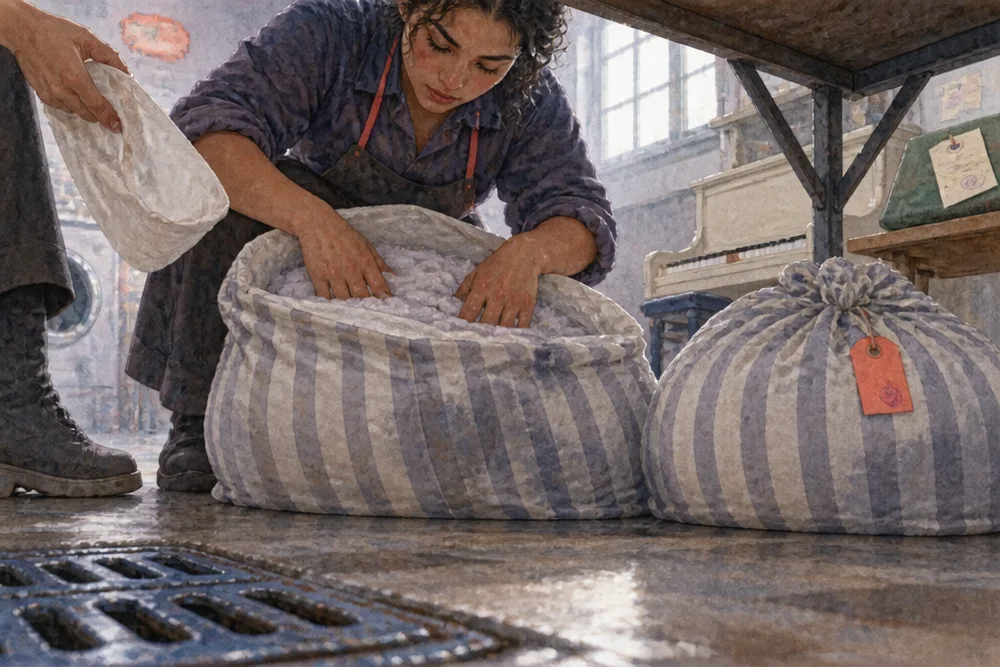
When the washer released, the woman began stuffing the towels into the case they’d come in. Water showed through the stripes before she had the whole load in. Queta handed her one of the liners they kept under the folding table. The woman opened it inside the case and pushed the towels down with both hands.
“You’d get people for drop-off,” she said.
“I think so,” Queta said.
The woman tied the lined case and hoisted it against her hip. She took the other one by its drawstring. Queta held the door wide enough for both, then went back for the broom. A few hairs had caught in the bristles. She pulled them free over the bin and put the broom back by the rear door. The wash sale was in the tin. The blank scrap was still on the counter. She slid it back under the rate card.
At one, Queta closed the cash tin and counted the bills. She separated the paid loads from the credit entry, wrote down the number of dryer cycles sold, and checked each amount against the rate card. The total was better than she had expected. It could not be treated as distributable money—not after supplies, paid shifts, and the old property bills—but it was proof that customers would pay for the large drums.
She wrote the total on the day sheet, then paused at the column for labor. The rota showed the paid attendant’s shift and the hours Queta had scheduled for herself. It did not show the time spent moving loads, negotiating dryer space, opening the door, or staying behind the counter while the machines caught up. She could fill the blank with an estimate. That would be more honest than leaving it empty, but it would not make the money appear to pay her.
She wrote a small question mark in the margin.
The machines settled into their cycles. The left bank remained dark, its coral tag bright against the blank controls. Beyond the front glass, buses pulled up and eased away from the turnaround. A customer stopped to read the sign before opening the door. Queta greeted him and explained the booking times without adding that they might change if the load took too long.