The Sound of Staying Put
Page 206 of 206
Chapters
Upstairs, a few chairs were still set in a loose half-circle. Beyond them, the ivory piano waited under the tall windows. Queta went back in, set the clarinet case down, and took out the instrument once more. There was no need to play another piece. She only checked that it was secure, tightened the case latch, and lifted it by the handle.
Tomorrow she would go to Hemline. The laundry would open on its schedule. Next month, if enough people booked, the musicians would come back. For tonight the sounds could stop at the appointed hour, and nothing would be owed for stopping.
Queta turned off the room light and came down the street stair for the final time that night. She tested the latch, heard it catch, and left the key in the lockbox for the host’s next shift. She did not take it home in her pocket.
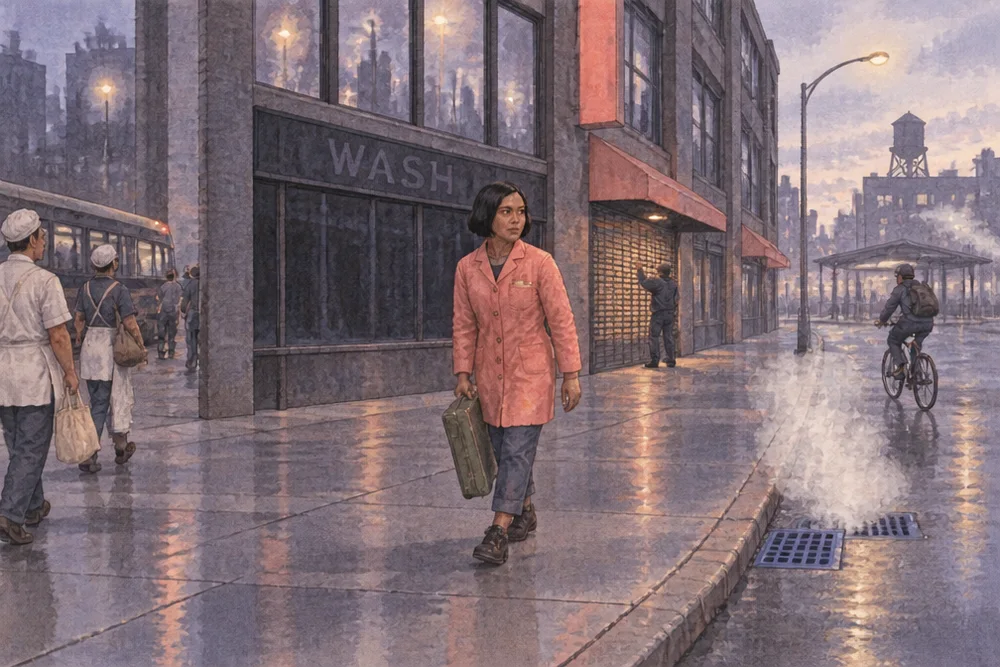
Outside, Bellwether Row carried on in its separate schedules. Bakery workers were walking toward buses; a late shop was pulling its security grille down; a cyclist coasted past the turnaround. Queta stood on the sidewalk with her clarinet case. Behind the window, the wash sign remained dark. Above it, the tall upstairs windows reflected the streetlights.
She thought of Tess’s folded slip, now marked used and returned to its owner. It had gone through the account without becoming a reason to keep someone indebted. The old paper had crossed from Amalia’s hand to Tess’s, through the ledger and the years, and back into Tess’s pocket. Queta had not made it worthless to escape it. She had honored its limit.
The thought settled without needing a speech. She had wanted a room where people could play without purchasing permission. She had helped make one, but not by promising that nothing would cost anything. People paid, people were paid, and a few places were kept open without charge because the cost was covered. If the numbers stopped working, the bookings would stop too. That was no insult to music. It was a way to let it return honestly.
Queta lifted the case and started toward home. At the corner she heard the bus release its brakes and pull away. For once, she didn’t measure the sound against a phrase she still owed the room. She walked at her own pace, with the next morning already allowed to belong to the work she had chosen.
Behind her, Spindle Wash stood dark below and lit above only by the street. Its two doors had their own hours. Neither depended on a promise no one could keep.