The Sound of Staying Put
Page 85 of 206
Chapters
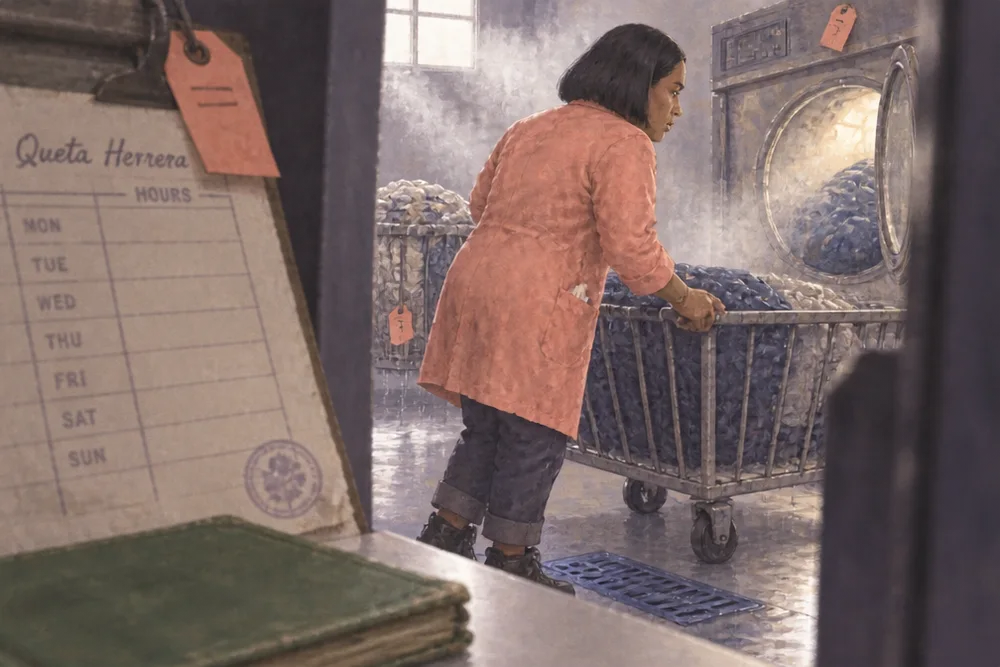
She stopped herself before offering the last customer an unpriced extra cycle. Instead, she pointed to the posted rate and waited. He read it, asked one question, and paid. No one yelled. The line moved by inches.
At ten, the dryer was still working on the sleeping bags. The next wash had finished, and the clothes sat in a cart waiting for space. Queta could have told the customer to leave and come back. She could also keep the load moving, if she stayed past the end of the shift printed on her rota. Her body made the choice before she looked at the clock: she lifted the wet bundle and wheeled it toward the dryer.
The customer saw her struggling with the cart and came around the counter. “I can help with mine.”
“It’s all right. I’ve got it.”
He waited, not offended, until she took the handle. Then he followed her to the dryer and loaded his own clothes while she moved the next customer’s bundle. There was no system yet for how many carts could fit through the aisle, or how long each load would occupy a dryer. Queta watched the customer flatten a sleeve before shutting the door and thought: this is work someone is doing, whether or not the receipt knows it.
She looked at her rota. The ending time had passed by twenty minutes. The hours column remained blank beside her name. She could write them down. If she did, the day’s apparent margin would shrink. The business had not earned enough yet to pay all the shifts it needed. But if she left the line where it was, no one would ever know how much labor the line required.
Her pencil hovered above the paper. Behind her, a dryer clicked into its next cycle. A customer asked where to put a completed load. Queta told him, moved the basket, then went back to the rota. She drew no mark.
She told herself she would remember. The explanation formed quickly: it was opening week; she wanted the customers to return; there were not enough people to hire yet. She had heard all of those reasons before. They were not false. They were also not a wage.
At the counter, a customer counted out bills for another large-drum load. Queta put them in the tin, smoothed them once, and did not add the minutes she had worked to the tally. The drawer looked better than it had any right to. The floor was taking payment. Queta was taking the rest.