The Sound of Staying Put
Page 123 of 206
Chapters
“That’s not the same thing to the people who took time off.”
“No.” He signed the bottom of the notice. “So we give them their choice and don’t make them ask twice.”
Tess waited until the other customers had gone. She took the notice in, then held out her appointment card. “Keep my deposit for now. I want the refund if June says there’s no safe time. If she finds a way to keep the block, call me before you post it.”
Eloy wrote the condition on the card and handed it back. Tess checked it before putting it away.
“That’s what I wanted,” Tess said. “A time I can count on, not a story about how it’ll all work out.”
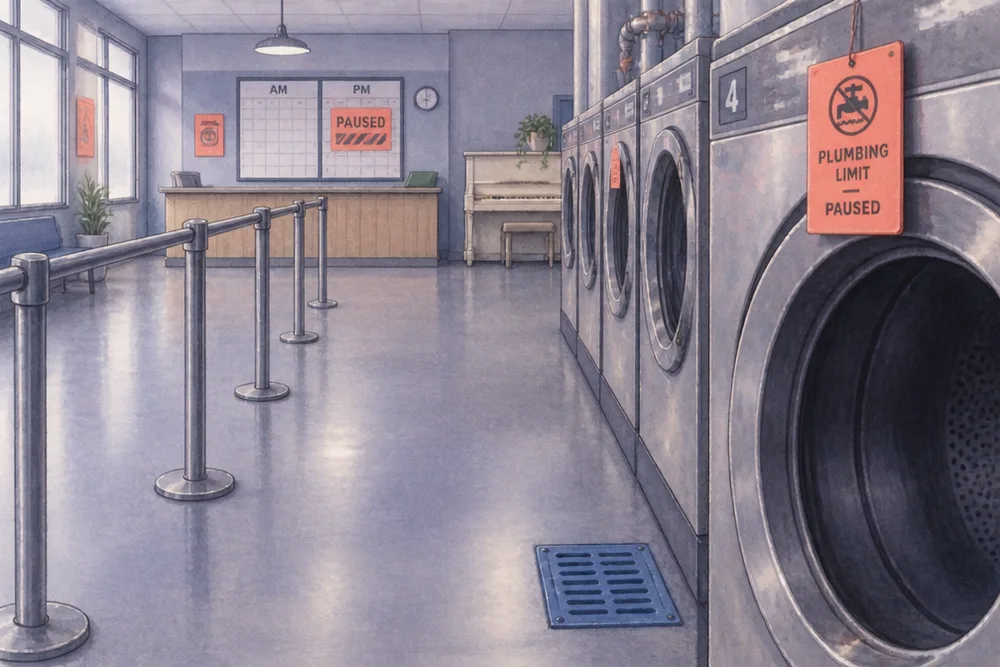
She left with her basket empty. Eloy stood at the wall calendar after the door shut. The evening block had been the fullest row. Now its squares were obscured by the pause notice, and the other block remained untouched. The business had proven that people wanted dependable appointments, then shown that demand could exceed the one bank’s plumbing even when the machines themselves were sound.
Queta came to stand beside him. “If June clears it, we can keep the two blocks?”
“If she clears it, we ask what the line can carry. We don’t decide before she checks.”
“And if it can’t carry both?”
“Then we sell the hours it can carry.”
She rubbed a thumb across the edge of the paper cup. “That may be fewer than people want.”
“It is fewer than the calendar has.” He removed the coral booking square that marked the second block, peeled it carefully from the grid, and set it on the counter instead of dropping it into the wastebasket. He did not want the appointment to disappear from the record. It had been offered, accepted, and then stopped for a reason. The deposit choices had to be tracked; the promise had not become meaningless just because they could not fulfill it today.
Queta watched him write the status beside the square: paused pending June’s inspection. “You’re keeping it?”
“As a record. Not as a booking.”
He laid the square flat beside the appointment cards. On the wall, the remaining block looked smaller than it had that morning. It was also more honest. The washer floor had customers, paid appointments, and a physical limit that no rate card could bargain away. They would have to find out whether reliability could be sold inside that limit.