The Sound of Staying Put
Page 103 of 206
Chapters
The result was plain. The first week had brought in more money than their cautious estimate predicted. It had also taken more time, and the extra time consumed what he had thought might be distributable. The drawer held receipts, but no first payment for him. He drew a line through the penciled amount in his private notes, leaving the entry readable beneath the mark.
A bus sighed at the turnaround outside. The movement of people behind the glass passed from one lit rectangle to another, then disappeared down the row. Eloy checked the front lock, tested it once, and returned to the counter. He could hear a washer cooling, its metal ticking softly after the cycle. He wrote that down as no one’s hour; machines were allowed to stop without anyone staying to watch them.
The revised schedule lay beside the account sheet. Fewer slots. Two useful blocks. A reserved large drum could bring in enough to cover its own share of the paid hours, or it could not. There was no answer in the first week’s promising gross total. The answer would depend on whether customers chose the price, showed up, and collected on time—and whether the shop could serve them without turning Queta’s evenings into unpaid extensions.
He folded the trial sheet once and put it in the ledger pocket, not the receipt wallet. The property bills still belonged in the wallet. The laundry’s work belonged in its own record. He had wanted the first week to show that the building could pay him back. What it showed was smaller and less comforting: the business could collect money, if they gave it enough of themselves. That was not yet the same as earning it.
He left the distribution line visible. A blank was not a promise, but it was not a permanent answer either. Next week they would test the shorter schedule, the paid shift, and the price on the large drums. If those figures failed, he would not call his sister’s hours a family contribution and set the sheet aside. He would have to decide what he could afford to keep doing, and what he could not.
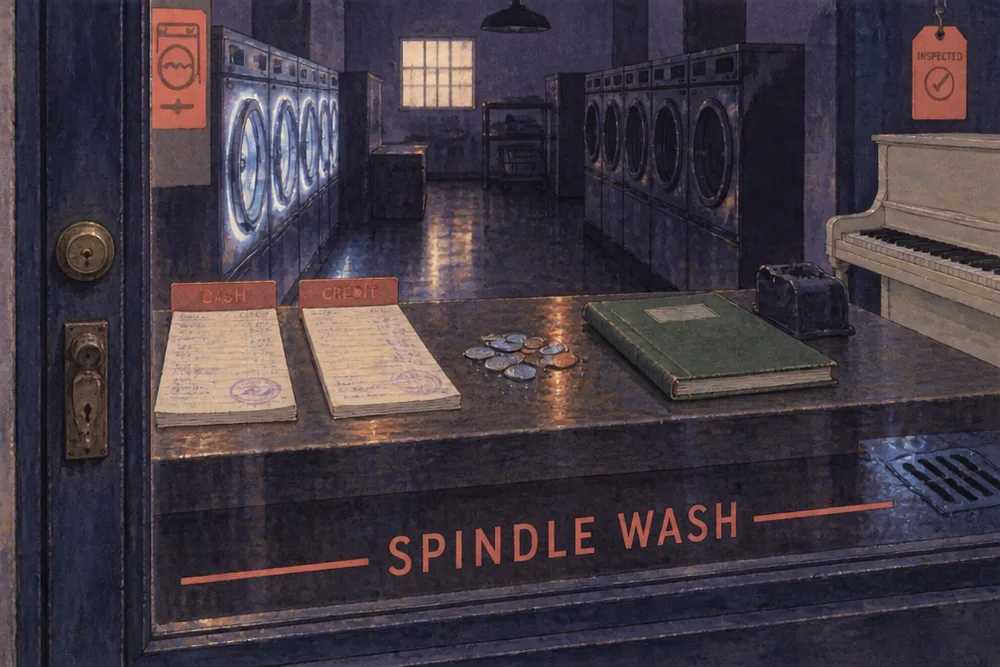
At the door, he looked once toward the bright washer bank and once toward the unlit one. He switched off the counter lamp. In the dark window his reflected shoulders rounded over the papers, and the damp coins shone briefly before the street took the light. He locked the door and carried the records with him, no payment made, no loss disguised.