The Names Beneath the Plates
Chapter 9 · The Key That Was Not a Gift
Page 97 of 224
Chapters
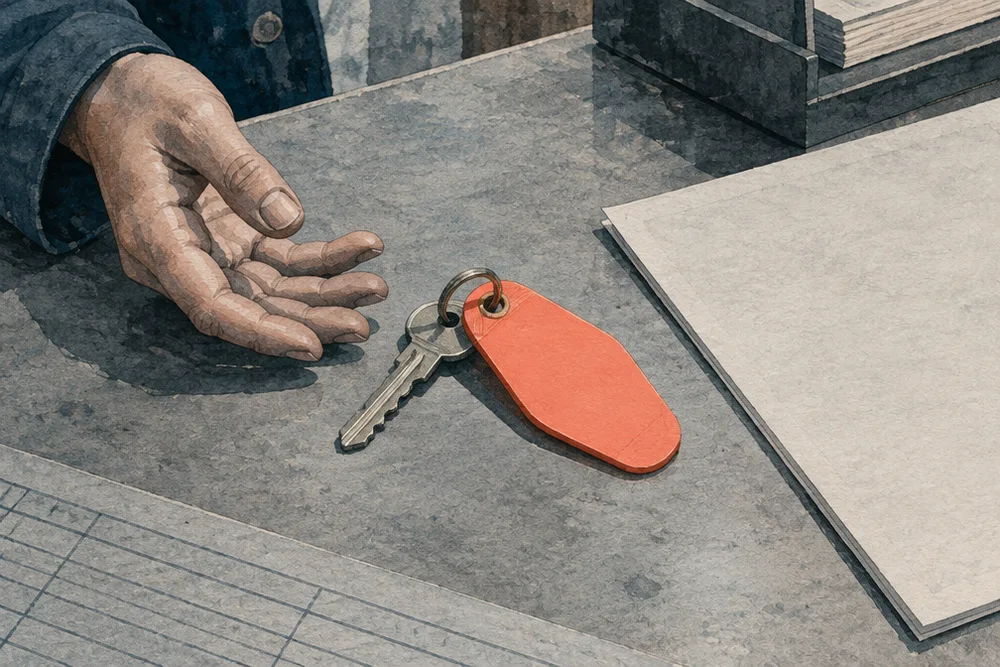
The room key lay on the desk between Carys and Desta Rusk, its coral fob bright against the gray ledger. Carys had seen the same color on the room board at Ninth Step, where applicants climbed the stairs to look at the lockable rooms they could not yet enter. She kept her hands in the pockets of her indigo bib. The coral patch at her right knee rasped against her thumb when she shifted her weight.
“You said you wanted to see the room,” Desta said. Her high-buttoned coat was fastened to the throat. She held her elbows close, as if the office were cold, though the stove ticked warmly beside the door. “It’s ready now. You’ve earned the inspection.”
“The tally says six weeks,” Carys answered. She leaned back, chin square, making herself look less eager than she felt. “Six weeks of shifts.”
“Your work has been reliable. We can make the adjustment.” Desta turned the key so its fob faced Carys. “There’s a statement to sign, and then I can release it.”
On the desk, beneath the key, sat one sheet of company paper. Carys could read the heading upside down: ROOM TURNOVER—VOLUNTARY DEPARTURE. A ruled line waited for her name. She looked at the blank space, then at Desta’s face.
“Who left?” she asked.
“The room was vacant when it was reassigned.”
“That’s not who.”
Desta turned the paper around, neat as setting a place. “The prior resident had departed. There was no dispute entered at the time.”
Carys knew the room number before she read it. Ninth Step, landing room four. Orren Pellhatch’s room. She had stood there with Desta only days ago, staring at the bread stamp burned into the sill. The mark had been small and dark, left by the loaf he used to set there to cool. She remembered the way the room had looked ready to be photographed: bed tight, blanket square, not one thing left that belonged to the person who had slept there.
“This says he left voluntarily,” Carys said.
“It says the room was vacated. That is the administrative category.” Desta’s whole torso turned toward the filing cabinet, where she drew out a narrow card. “You’re not being asked to decide what happened to him. You’re being offered the room you’ve qualified for.”
The key was close enough to touch. Carys pictured her own curtained bay, where every cough and whispered argument belonged to everyone. A private room meant a door she could close. It meant waking without another person’s elbow in her ribs. Six weeks of shifts had seemed like a measured distance; now the distance had been placed on the desk in the shape of a key.