The Names Beneath the Plates
Chapter 7 · The Bread Mark on the Sill
Page 73 of 224
Chapters
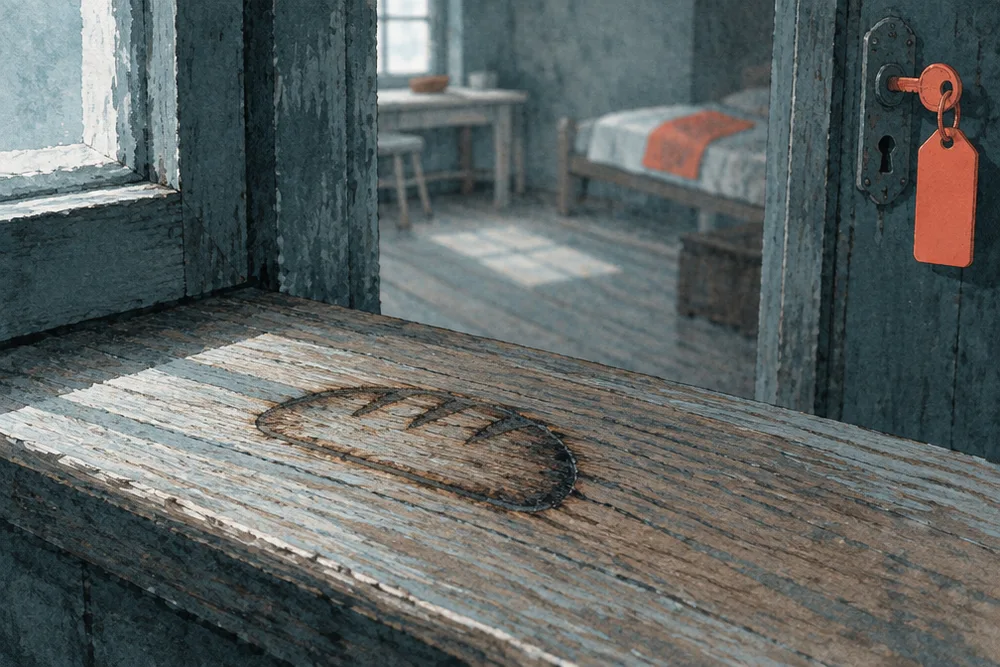
The room was smaller than the space Carys had drawn for it in her head. Its lockable door stood open on a narrow bed, a washstand, and a window looking down the chalk cut toward Kettlewick’s lower roofs. From here the kiln chimneys seemed to lean together, their smoke thinning in the watery morning light. A coral number tag hung from the door handle.
Desta Rusk stood just inside, elbows close to her high-buttoned coat. She turned her whole torso to indicate the bed. “The room is sound. The window shuts. The board shows you’ve nearly completed your qualifying shifts.”
Carys leaned back, as she did when someone made a demand sound like a kindness. Her long forearms crossed over her indigo bib. At the right knee, the coral mending in her trousers pulled when she shifted her weight. “Nearly?”
“Six weeks of shifts remain,” Desta said. “I’m showing it to you early so you can see what you’re working toward.”
A room of her own. A door she could close without a curtain seam twitching whenever someone crossed a dormitory bay. Carys had counted the weeks so often that the number had turned smooth in her mind. She had not expected the room to smell faintly of old flour.
“Who had it before?” Carys asked.
Desta’s gaze moved once over the room, measuring it as if checking an inventory. “It was vacant after a voluntary departure. The housing board assigned it for turnover.”
The words settled between them. Carys looked at the sill, then at the worn strip of floor near the bed where a trunk might have stood. “When?”
“The room is available now.”
Desta offered no date. Carys knew better than to ask twice in the same voice. “I’d like to see the window.”
She crossed the little room and lifted the latch. The lower sash stuck, then scraped upward a hand’s breadth. Kettlewick came in as a dry smell of chalk and smoke. On the sill, beneath the paint, a dark mark cut across the wood: a small circle with a bite-shaped wedge missing from one side. Carys stopped moving.
She knew the mark. Not from a room board or a company form, but from brown paper bags folded at the Blue Sluice bakery. Orren Pellhatch had stamped them himself when he worked there. The stamp showed a round loaf with a notch at its edge, the mark his family used to distinguish their bread from the company bake.
Carys leaned closer. The blackened shape was not ink. It had been burned into the wood, crooked and shallow, with one side darker where the iron must have lingered.