The Names Beneath the Plates
Page 90 of 224
Chapters
“The dates aren’t permission,” Bessa replied.
Nella looked at the sheet. “No. I know.” Her hand rested near the wooden rib tucked at her waist, but she did not touch the paper. “I thought keeping the record would be enough. If I could prove the firing dates, someone might finally ask the right question.”
“It helps,” Carys said. “But the question isn’t only what happened. It’s who gets to hear it.”
Nella’s mouth moved as though she had an answer, then settled. “That part I didn’t plan for.”
“None of us did,” Bessa said. She began arranging the folded slips by who was allowed to carry them. “But we can plan it now.”
Carys looked at the headings. The NAMED column held fewer marks than the others. She had expected the opposite, perhaps because names were what the plates offered first. The actual answers made the paper less dramatic and more useful.
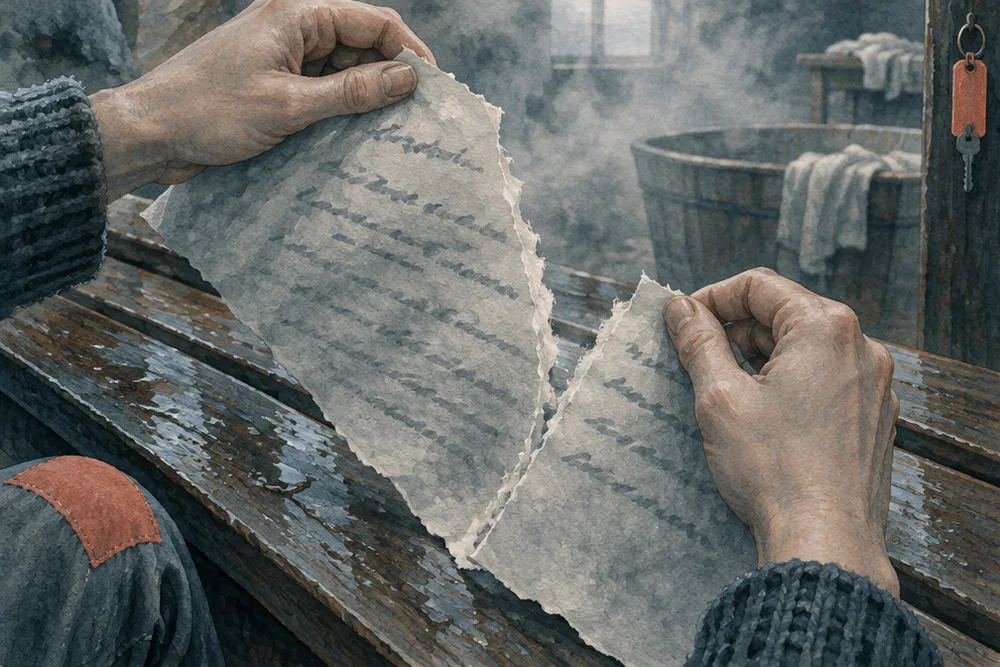
Two days later Carys and Orren met a participant who had asked to see the draft caption before deciding anything. They used a quiet corner of the public washhouse, where the steam pipes rattled and the benches stayed damp even when no one was bathing. The person—an older kitchen porter called Malen—read the draft twice.
It said: “A worker’s paid room was reassigned before the paid week ended.” Beneath it, Carys had written that the dates came from the plates and the batch stubs. No name, no room, no trade.
“This says a worker,” Malen said. “That is me to anyone who knows I was in the kitchen.”
“We can change it,” Carys said. “We can make it a combined count, or leave your case out.”
“You’ve got a count?”
“Not enough to promise one yet.” Carys stopped herself from adding the names of people who had not agreed. “We’re still asking.”
Malen folded the paper in half, then in half again. “I don’t want this used. Not the caption, not the date, not the fact I came to look at it. I shouldn’t have agreed to meet.”
Orren said, “Then that’s the answer.”
“I want you to forget I came.” Malen slid the folded draft back across the bench. “And if anyone asks, there was no conversation.”
Carys felt the urge to explain that they had been careful, that the wording was general, that she would not have put a name on it. Each explanation would have been another attempt to make Malen stay in the conversation.
“All right,” she said. “We won’t use it, and we won’t contact you again.”