The Names Beneath the Plates
Page 86 of 224
Chapters
“I understand.” Carys heard how quick the answer came. “I’m not putting you on anything.”
“You understand the words. We’ll find out about the practice.” Bessa turned the pencil in her fingers. “The plate record was made without asking the people it recorded. Whatever good it might do now, we don’t get to repeat that part.”
Carys felt her shoulders draw up. She leaned back, then made herself look at the blank columns again. “Then we ask each person what they want.”
“And write down the answer where it can’t be mistaken for permission to do something else.”
They began with names already known to them, but Bessa stopped Carys from filling the columns herself. “You can write what they tell you,” she said. “Not what you think they’ll tell you.”
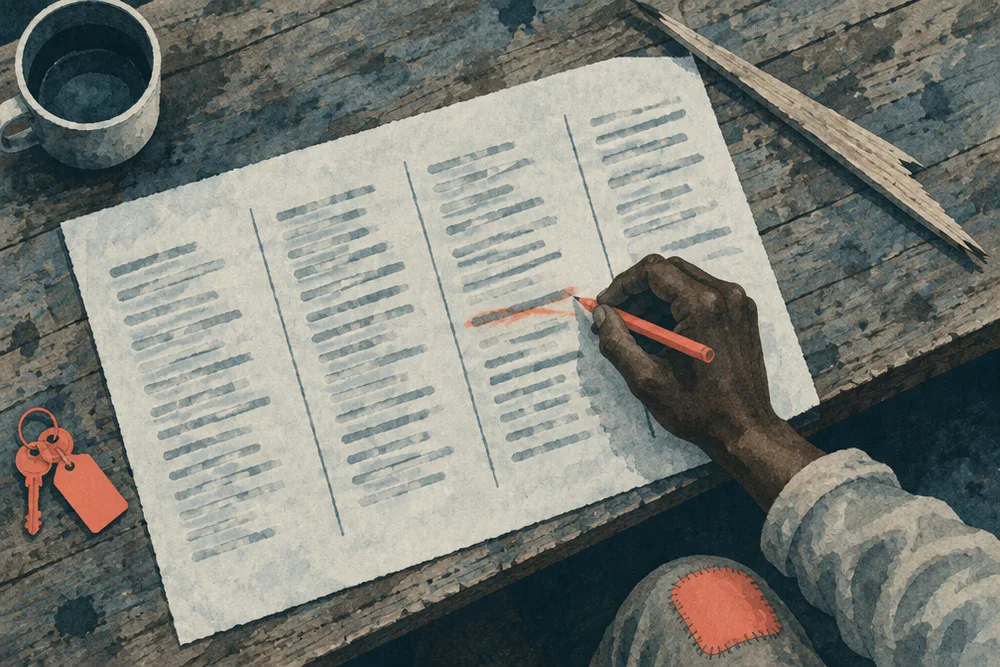
Carys folded the paper lengthwise so they could work on one case at a time. At the top of the first section, she wrote Orren Pellhatch. The letters seemed too permanent for a scrap of wrapping paper. Beneath them she left room for four separate answers.
“Orren knows about the plates,” she said. “He saw the first one.”
“That’s not the same as knowing about the dinner.”
“No.” Carys laid down the pencil. “I’ll ask him.”
Bessa nodded. “And don’t make ‘no’ sound like a delay. People say no because they mean no.”
Outside, someone called for a hem repair in a voice sharp with impatience. Bessa answered that she was coming, then gathered her measuring tape and went to the doorway. She left Carys the pencil and the paper, but not the decision.
Carys sat alone at the bench for a few minutes. Below, a barrel bumped over a seam in the floor. She could hear the tailor at the next stall working a treadle machine, its steady clatter like a kitchen rinse pump. The four columns gave each case a shape, but none of the shapes told her what anyone would choose.
She crossed out a small note she had started beside Orren’s name: “first plate.” It was true, but it did not belong in a permission record. She added a separate line instead: “Asked about public use: not yet.” Then she put the pencil down before she could turn an unfinished answer into an answer of her own.
Orren met her after the evening bake, not at the bakery hiring corner. His sister had sent word through a flour porter who knew the family, and he chose a small covered stair behind the old grain scales, where people could pass without having to stop. He stooped under the low beam. A split in one thumbnail held a trace of flour.