The Names Beneath the Plates
Page 21 of 224
Chapters
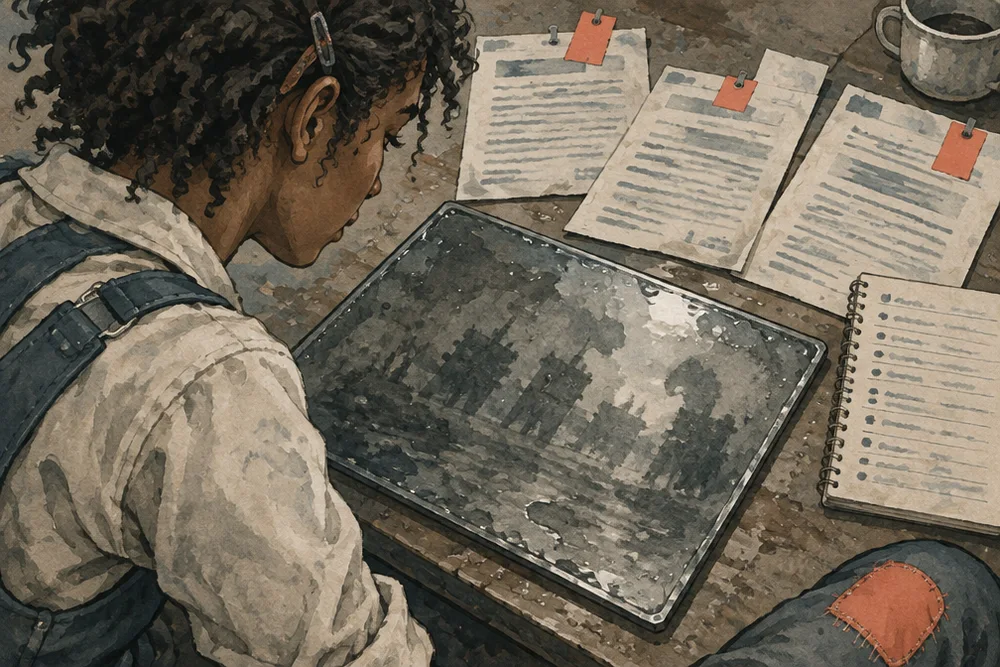
Carys searched the notices. She had saved one from that week, a slip with a faint crease across the middle. On it, a small note recorded the reassignment of a room at Ninth Step. The date matched. She checked the room board after the next shift and found a new name pinned to one of the coral tags. There was no sign of who had occupied it before.
A third plate waited in the sack, its rim cracked but still sound. Carys hesitated. She did not know whose name would appear. Each one belonged to someone, and she had begun to understand how quickly a name could become evidence, or a target, or an invitation to be questioned. Still, the other plates had not asked her to look away.
She put the third plate in the basin. The letters emerged, this time a name she had never heard. The date followed. When she searched her notices, the matching entry was there: another room change, another new resident. The same neat line in the same small print.
Carys leaned her palms on the bench. The room shifts were not coincidence. Three dates, three names, three reassigned rooms. She thought of the sister outside the bakery, folding an apron that still smelled of flour. She thought of the people on the stairs counting the room tags, never seeing the ledger behind the office door. The plates had kept a record nobody in charge could easily call a mistake, because the record had not been meant for them to find.
She dried the plate carefully and tucked it with the others. By the time she finished, she had a list of three dates and two names she could identify. It was not enough to accuse anyone. It was enough to keep looking.
At the end of the shift, the kitchen supervisor asked Carys to stack the salvage crockery by the side door. She obeyed, carrying each chipped plate to a separate rack. When she reached the bottom, she noticed that the racks had been marked with chalk: ordinary rejects on one side, older stock on the other. The older plates were due to be collected when the kitchen next cleared its shelves.
Carys’s hand paused over a plate with a shallow chip. She did not know whether a name lay beneath its glaze. She had no way to test every one without drawing attention. The separate cold tub was meant for exactly that work, but it was also where the marks had first appeared. If someone came to collect the crockery, the plates might disappear into a cart before she could learn what they held.