The Names Beneath the Glaze
Page 74 of 230
Chapters
Iona listened. She did not call the name yet. Not every memory had to be used as soon as it arrived. She wrote down the whistle: three short notes, then one long. The grandmother demonstrated the rhythm under her breath. The boy repeated it, carefully, and said he recognised the last note from the recording. He still could not say whether he had heard it before the recording. Iona left the space beside the saucer number empty.
The process had taught them patience, though it had not made them comfortable. Nobody knew what the dead would do if the names remained blank. Nobody knew whether the ferry would move in time. The islanders kept looking toward the windows as if the water might answer. It did not.
The man and his sister came to the table once more. They had found no new memory of their mother. The sister offered the detail of a yellow tin; the man could see it, but could not tell whether he had seen it or heard it described. He shook his head and stopped. Iona set the blank saucer aside without making them speak the name again.
“I thought remembering would feel different,” the man said.
“It may,” Iona replied. “When it’s yours.”
“And if it never comes?”
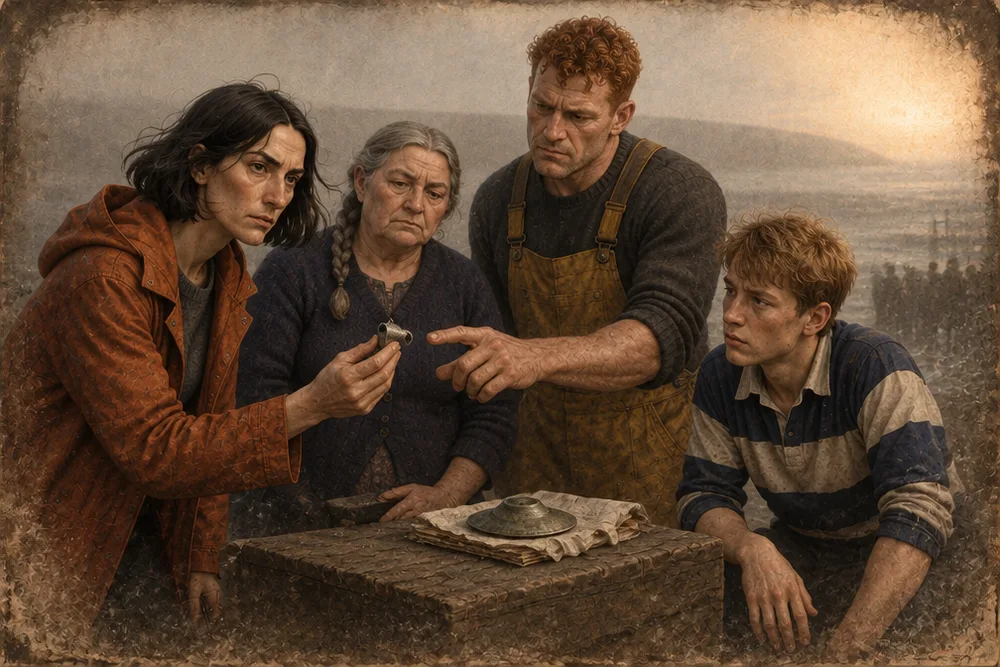
“Then we’ll have to find another witness.”
The sister squeezed his hand. He accepted this, not as comfort, but as a task he could carry.
Iona went back to her place beside the rack. Ada Morrow and Mr. Sallow had not changed. Their names sat under the glaze with a subdued brown clarity. The first successful calls had shown her that recognition was possible; the failed ones had taught her not to confuse effort with truth. She could not hurry what a person remembered, and she could not call a dead soul by means of a detail borrowed without care.
The hour grew late. Lamps cast sharp shadows beneath the table legs. The fog flattened the world outside, turning the window gap into a pale rectangle. Iona kept her eyes on it, but her thoughts returned to the blank saucer in the office that bore her own name. Her mother had spoken it for years. A memory, then, or a claim. She did not know which.
She held the pencil between thumb and forefinger. The names would need to be restored before the tide could move. Each one required a living witness and something particular, firsthand or inherited honestly. She had found the rule by watching it work.
“One at a time,” she told herself, and waited for morning’s first witness.