The Names Beneath the Glaze
Chapter 12 · Two Mugs Hold the Page
Page 131 of 230
Chapters
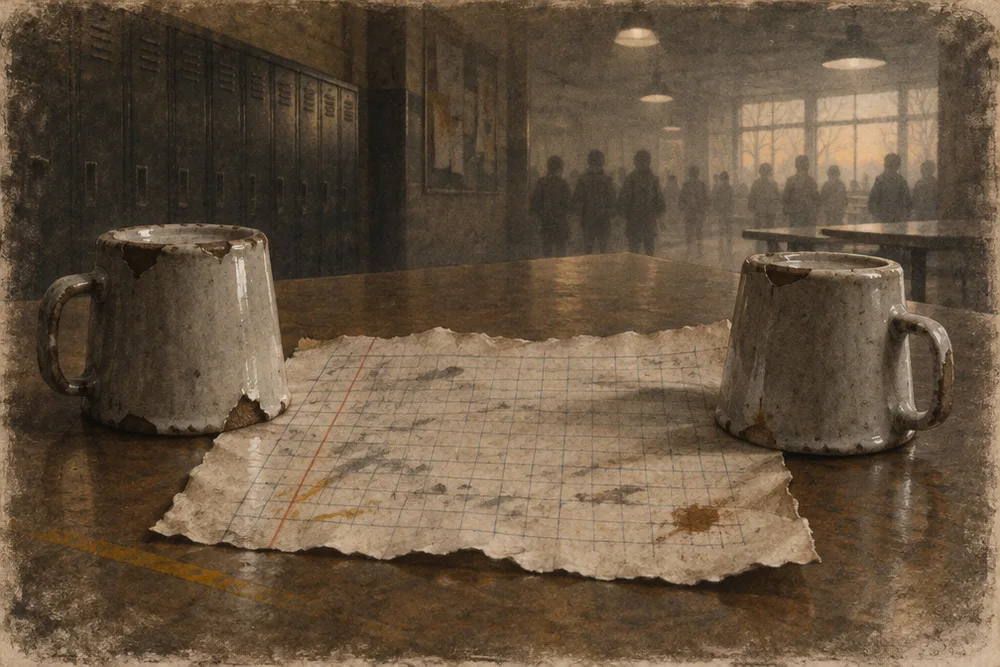
The page Maren gave her was still damp at the edges, though it had spent the night folded inside the ledger. Iona laid it flat on the school hall’s long trestle table and held down its corners with two chipped mugs. The ink had feathered where Maren had torn it from the crank ledger, but the instructions remained legible: open sash; witness seated; each name spoken with its memory; no answer between names; cast off before speaking again. At the bottom, in a narrow hand, somebody had added, “Do not call the keeper.”
The shelter smelled of wet wool, instant coffee, and the paraffin heater that had been coaxed awake before dawn. Beyond the high windows, fog pressed against the glass, turning the island’s few lamps into pale stains. Iona’s rust coat hung over a chair to dry. Without it she looked all angles, shoulders narrow beneath her gray sweater, black bob tucked behind one ear as she bent over the page. Maren sat opposite, chin lowered, broad hands closed around her mug. She had not tried to take the instructions back. That, Iona thought, was its own kind of answer.
“The keeper,” Iona said. “That’s me?”
Maren looked at the torn edge instead of her daughter. “It was the person who read the roll. The one who kept the names moving.”
“And if the keeper’s name is on a saucer?”
“Then it’s not a final roll.”
The words were mild. Maren’s voice had the worn flatness it acquired when she was refusing to soften a fact. Iona pulled the page closer. The last line had been written in a different ink, but the handwriting was Maren’s: careful, upright, familiar as the marks on a school register. “You knew this when you started reading my name.”
“I knew the rule.”
“That isn’t the same thing.”
“No.” Maren lifted the mug, but did not drink. “It isn’t.”
Iona followed the ink with one blunt fingernail. The final roll was not another morning’s roll. It was a departure: a witnessed act, completed only if the ferry cast off before anyone spoke again. A name spoken with a memory restored the glaze and let its dead owner wait offshore until the next dawn. The final roll sent them onward. It had to be read from the office’s open sash, with a living witness beside the reader. If the reader spoke a name that belonged to herself, she remained among the living and the crossing stayed unfinished.