The Names Beneath the Glaze
Page 70 of 230
Chapters
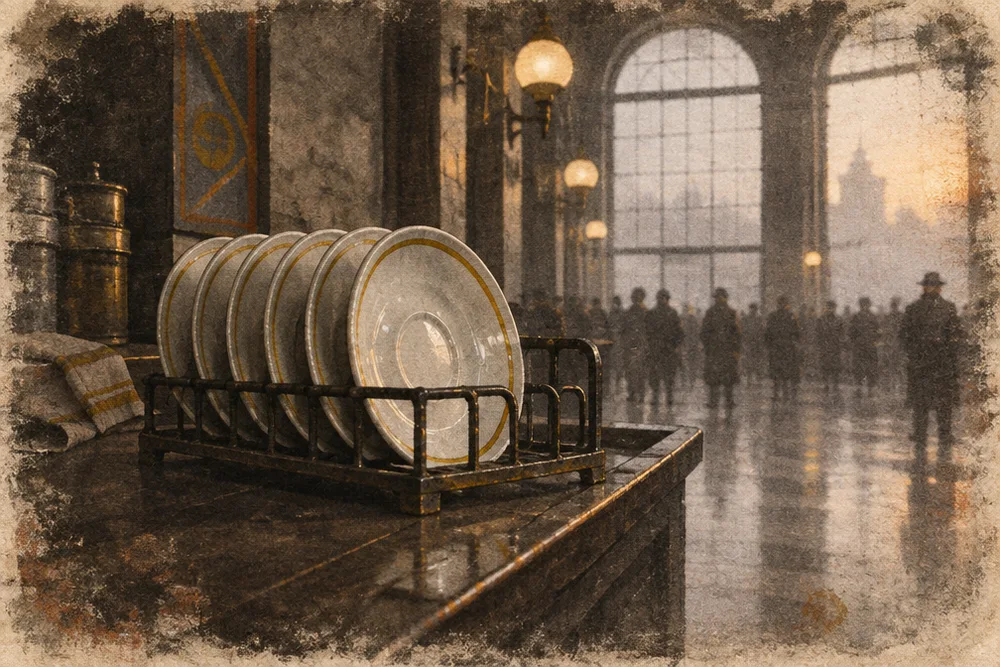
She glanced at the clock. The hands kept moving, though the tide outside did not. The difference felt obscene. Time was willing to go forward without the water; the island was not. Whatever had stopped the tide had not stopped the people in the hall from growing tired, hungry, or cold. A boy carried around a tray of mugs. Someone found blankets in the supply cupboard. Life’s small demands did not yield to the dead.
Iona’s stomach knotted. She had not eaten since the ferry office. The smell of orange cordial and damp clothes seemed to have entered her blood. She took a mug of tea from the tray and drank it standing up. It was too sweet, but warm.
The woman in the scarf came back to her. “I found the picture,” she said. “My mother had it in a drawer. Aunt Ada’s skirt really is crooked. You can see the hem turned under on one side.”
“You saw it yourself?”
“I did. And the bowl was blue. I remember washing it after my aunt died. There were needles beneath it.”
Iona looked at Ada Morrow’s saucer. “Do you want to speak the memory again?”
The woman nodded. Iona set the saucer on the table and let her choose where to begin.
The woman said Ada Morrow’s name, then described the crooked hem and the blue bowl. She told the dead woman that she had found the photograph, and that she remembered the needles hidden beneath the bowl. The first time, the saucer had already taken the name. This time, nothing new appeared, but the dark lettering grew more distinct, as if the glaze had been wiped clean from around it.
“I’m sorry I didn’t remember sooner,” the woman said.
Iona let the words settle. The saucer could not answer for Ada, and the shadow beyond the window had not returned. But the woman had offered something more than a name. She had looked at the memory again, found the part that was hers, and said it with care.
“She may not hear you,” Iona said.
“I know.” The woman’s fingers hovered above the rim without touching. “I wanted to say it anyway.”
Iona understood. The ritual had rules, but the living were not only working for the dead. Sometimes they needed to speak what had remained unsaid, even if it did not restore a name. She did not know what would happen to that need when the ferry finally moved, or when the roll was complete. She only knew the woman’s face looked less pinched than it had when she first came to the table.