The Names Beneath the Glaze
Page 65 of 230
Chapters
When the grandmother and child had both described the ball, Iona let them speak the name together. The child said Mr. Sallow had held it in his left hand; the grandmother said he had mended its split seam with fishing line. Their voices did not match in pitch or certainty, but they carried the same object between them.
The glaze darkened. The name emerged more slowly than Ada Morrow’s, the first letter drawing itself in a faint brown stroke, then strengthening as the remaining letters surfaced. When it was done, Mr. Sallow sat beneath a hard shine on the saucer, neither neat nor bright, but legible.
The child’s grandmother covered his shoulder with one hand. “That was a good ball,” she said, and the child laughed once through his nose.
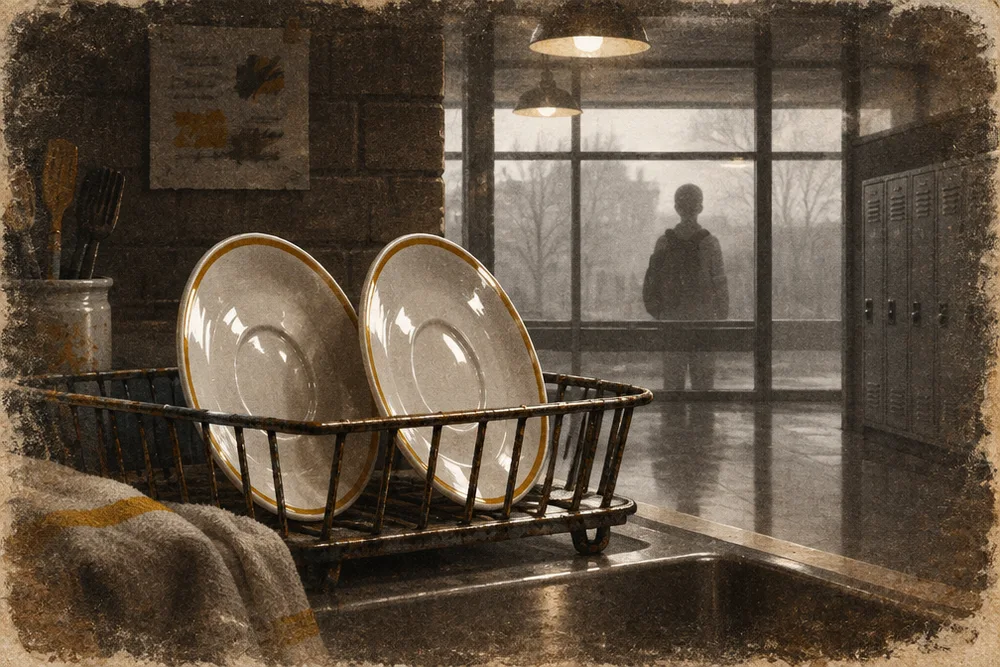
Beyond the window, a man-shaped shadow shifted back from the glass. It moved at an angle, one shoulder lower than the other, and the fog consumed it before Iona could decide whether she recognised anything in the gesture.
“He’s gone offshore?” the grandmother asked.
“He’s waiting there now,” said Iona. “Not at the window.”
The woman watched the pale glass. “He always did hate waiting.”
“Was that a memory?” the child asked.
“Yes,” she said, and gave him a small smile. “He complained every time the kettle took too long.”
Iona set the restored saucer beside Ada’s. Two names returned to their proper places. The rest of the rack seemed more accusing for the contrast, its empty, clean faces arranged in orderly rows. She counted them again. A count did not tell her how many the dead numbered, but it gave her the scale of the task they had begun.
Tess’s name was nowhere on the list. Nor Ned’s. Those were matters for another time, though Iona felt the shape of them waiting just beyond what she knew. She pressed her thumb to the edge of the rack and looked toward the windows.
A figure stood there, close but not touching. Its face had no features she could make out. Behind it, the others formed a crowd in the mist, their outlines smudged by the pale waterlight. They were not turning away from the school. They were watching the hall, waiting for the next call.
Iona wanted to say that they would get through the names, that no one would be lost in the crowd. But she could not know that, and the room needed no more false certainty. Instead, she gathered the list, the pencil, and the two saucers with restored lettering.
“We’ll take the next one when we have a memory,” she said.