The Names Beneath the Glaze
Page 2 of 230
Chapters
Inside, the air was colder. Dust showed in the line where the raised archive floor met the wall. A clock over the counter had stopped at 7:12. Iona looked at it, then at the watch on her wrist, and decided not to find the coincidence meaningful. There were forms to photograph, shelves to measure, and a buyer waiting for her signature.
On the counter sat the playback unit, its red timer lit and ready. Beside it lay the inventory clipboard, Tess’s neat block letters visible through the top page. Iona set down her bag and woke her phone. The recording was scheduled to play at dawn every day. She had sent it six weeks ago, to spare her mother the work.
The recording had been made in her flat on a rainy evening, with the kitchen extractor rattling behind her. She had read the list from Maren’s ledger, checking each name against the old passenger book, then uploaded the file and set it to repeat at 7:12. It was an efficient arrangement. Her mother had asked for help; Iona had found a way to provide it from two hours away.
The office phone showed no missed calls. Iona set her own phone face down and pulled on the thin cotton gloves she had bought for the inventory. The buyer’s list began with the counter, two stools, the rack of saucers, and the ledger. The old office was being sold as a unit, contents included. Tess planned to turn it into a workshop for electrical repairs. That was sensible. The building had been useless for years.
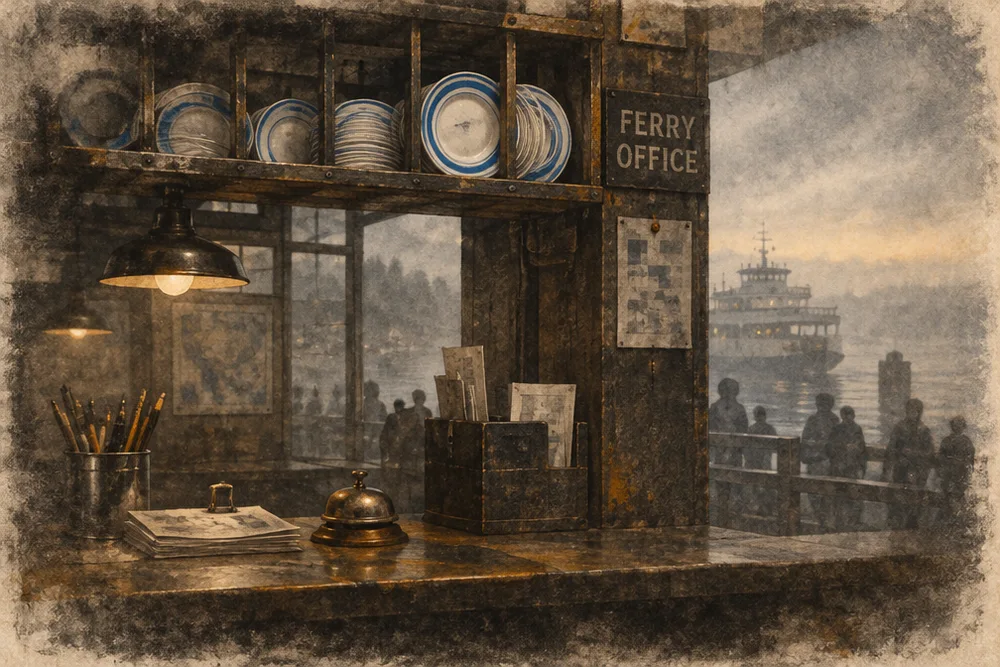
Iona took photographs as instructed, moving slowly enough to capture the cracks and the damp mark above the window. Each flash left the room briefly white. In the narrow viewfinder, the counter looked more worn than she remembered. She photographed the stopped clock, the phone, the playback unit, and finally the rack of saucers.
They were ordinary household saucers, a dozen or so, cream-colored with a thin blue ring. Each had been placed upright in its own notch. Their undersides were turned toward the window, where the names had been written in black glaze. The old lettering used Maren’s compact, unadorned hand: no loops, no flourishes, no wasted space.
Iona leaned closer. At the angle she stood, the names were unreadable. The saucers were kept turned toward the fog for the morning call, Maren had told her when she was a girl. The dead could hear their names through the glass. She had never believed that. She had believed her mother believed it, which was different.