The Names Beneath the Glaze
Page 197 of 230
Chapters
The names came steadily. Iona spoke each one, then the memory attached to it. A man who warmed his hands over the school boiler while he waited for his daughter’s lessons to finish. A girl who collected buttons from coats left at the hall and sorted them into matchboxes. A deck passenger who could mend a torn net with a hook and a length of twine, though he had never owned a boat.
Some memories had arrived as certainty. Others she had carried from person to person, asking until one detail held. She spoke of a cracked green mug, a habit of tapping twice on a door before entering, a heel worn down on the outside because its owner walked with one foot turned out. The details sounded too ordinary for the damp shapes listening beyond the sash. That was why she trusted them. They belonged to the people who had remained alive long enough to remember.
At every name, a saucer took on its sheen. The lettering did not rise or sink; it showed itself, as if the glaze had been waiting for the right light. Each dead person moved from the queue toward the ferry and through its fog-gray hull, where no lantern burned. The line shortened without a footfall Iona could hear.
The office seemed to breathe around her. A drop fell from the raised archive floor and struck the boards. The tide had begun to press against the pilings, though it had not turned. The floating ramp trembled. In the windows, the crowd appeared doubled: the dead outside, and a row of pale reflections behind Iona’s shoulder.
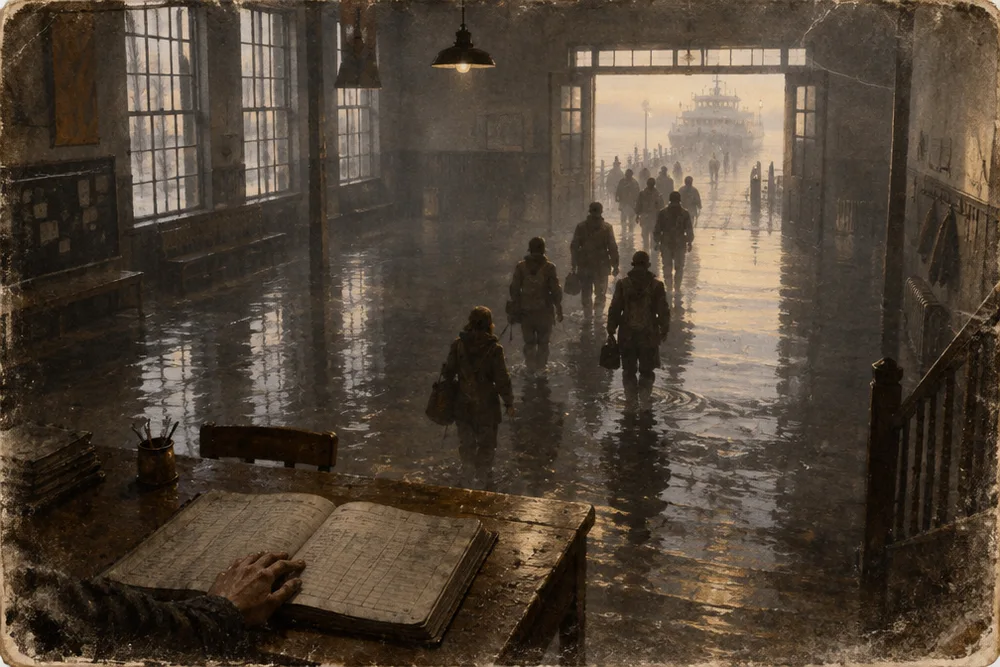
She did not turn to look. “Maren Vennick,” she read, reaching a name from the ledger that had belonged to a passenger lost long before her own childhood. “You carried a tin of mints in your coat and gave one to the ferryman every crossing. You said it kept him from chewing his nails.”
The ferryman stood at the end of the pier, cap low over his brow. For a moment his face emerged from the fog, broad and tired. He gave no sign that he had heard. Then he walked toward the vessel and disappeared at the gangway.
Iona marked the line. Her shoulders ached from the forward lean; her square-toed boots had gone cold at the seams. She flexed her fingers once and continued. The work did not become easier, but the dead no longer seemed to be waiting for a mistake. They waited to be recognized.