The Loaf That Carried the Tide
Page 4 of 6
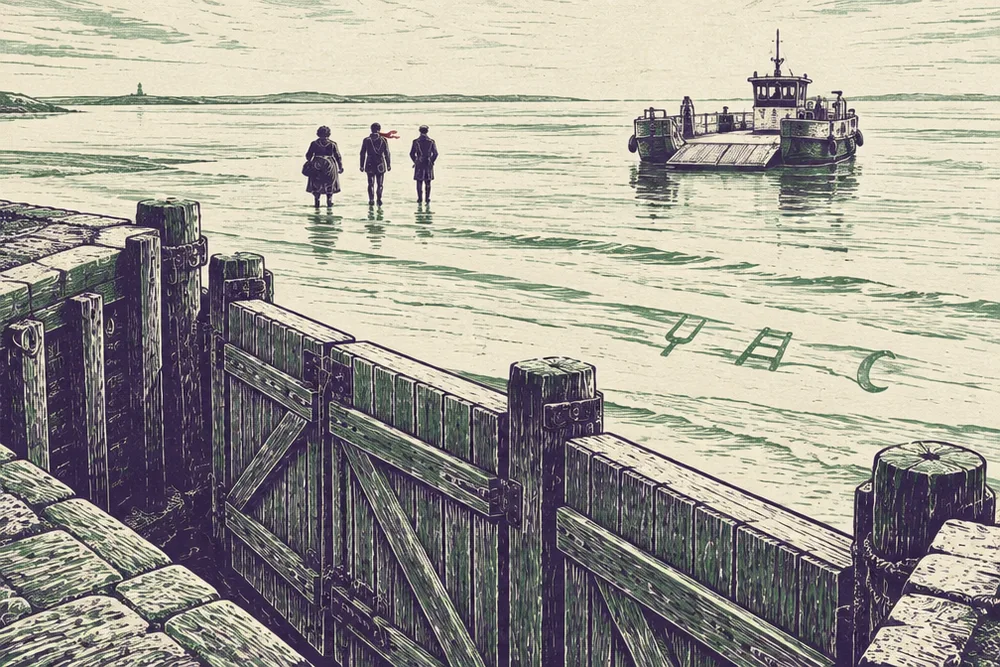
The ferryman leaned over the outer piling, one knee bent, his weight balanced on the other leg. Beyond the barred gate, the ferry waited in the green-gray shallows, its bow turned toward the harbor. Sola could see people aboard between the rails: a child with a red scarf, an old woman holding a basket, and someone standing very still with a loaf-shaped parcel in both hands. The tide in Sola’s cut bread pressed toward the crust. Outside, boats settled lower by the minute, their keels knocking stone.
“There’s enough water in the gate channel to float the fishing boats,” a man called from the wharf. “Open it now. We can clear the slip after.” The ferryman looked from the waiting ferry to Sola. The three cuts lay on her peel, each green current held inside its own crumb, each pale mark unlike the one before.
She saw again the flour sacks stacked across the old ramp, the hatch above them, the line where the boards ran beneath the storehouse wall. For years she had treated the hatch as a handy way to lower a basket to the boats. She had never thought about what the boats had once come for. “If we open the gate and there’s nowhere for them to land,” she said, “we’ll have brought the water back to the same closed door.”
The man swore softly. A hull scraped stone, and its mast jerked. Sola stepped to the first flour sack. It was as broad as her shoulders, tied with doubled cord. She planted her feet wide, bent her knees, and lifted. The sack dragged against the threshold; dust sifted over her apron. Her arms trembled before she got it upright.
“Uphill,” she said. “Every sack. The landing first.” For a beat nobody moved. Then the netmender came beside her and squatted to inspect the knot. Her striped trousers creased at the knees. “That cord’ll cut,” she said, passing Sola a folded piece of sacking to tuck beneath it. The ropekeeper, long hands quick despite their age, took the far end. Others crowded in, neighbors from the wharves and the bakehouse. Together they lifted the sack toward the lane that climbed away from the harbor.
The first sack went uphill, then the next. A chain of people formed from the storehouse to a dry loft above the lane. They passed the weight from arm to arm, boots grinding flour into the stair treads. The air grew chalky. Sola’s curls loosened from their tie and stuck damply to her forehead. She carried until her back began to shake, drank from a tin cup, and returned to the stack.