The Last Stop on the Way Back
Chapter 22 · Names at the Lift
Page 209 of 316
Chapters
Joren Keld had once believed a notice became real when it was stamped. He had spent thirty-seven years behind Saltmarket’s fare counter, giving paper the authority of doors and clocks. Now he stood under the depot’s dripping eaves with a stack of notices in his coat and could not make himself knock on the first door.
The address was written in Brina’s hand: Iskend, Serrat—shore relative, east fish lane. The council’s old route book had listed the family at Netmakers’ Steps, a stop that did not exist. Joren had copied that absence into forms until it became a fact everyone else was expected to live inside. He could not correct it with a neat line of ink.
He knocked. A woman opened the door with a knife in one hand and a strip of fish skin in the other. She was not Serrat; Joren knew Serrat’s copper hair and indigo apron from the platform. This woman had silver in her braid and a child peering around her hip.
“I’m looking for Serrat Hoskin’s family,” he said. “I have news about the landing.”
“There are three Iskend families on this lane.”
“Then I’ve brought too few notices.” He kept his hands visible. “Serrat is at the erased stop. Her grandson has come ashore. The rest are being offered a way across, if the landing can be made safe.”
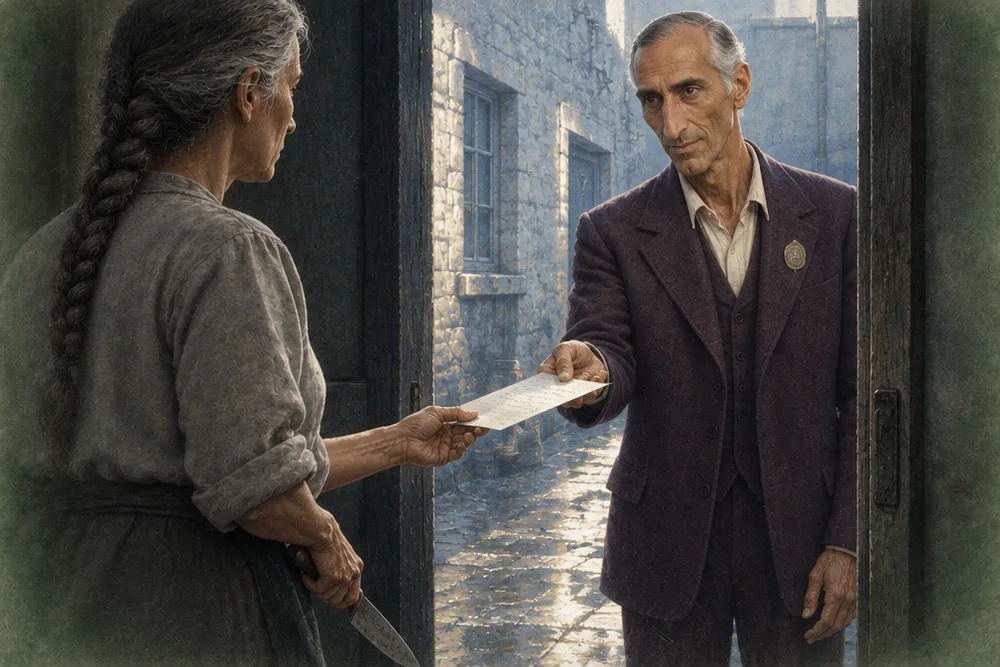
The woman’s knife lowered a fraction. She looked at his plum suit, polished boots, and the old clerk’s badge pinned there though it no longer opened any door. “You’re the one who signed them off the map.”
“Yes.”
The child’s face withdrew behind the door. Joren did not say that he had never seen the platform, never heard its bell, never meant for anyone to be left there. Meaning was a poor tool for lifting a burden.
The woman took the notice. “I’ll tell the others. Don’t write that we’re grateful.”
“I won’t.” He had made enough records that lied by implication. When the door closed, he stood a moment in the lane, listening to the ordinary harbor clatter beyond the roofs. Then he took out his list and drew a careful tick beside the first name.
The notices had no printed seal. Joren had insisted on that. A council stamp would have made them look like a promise from people who had not yet agreed to provide a lift, a landing, or a single paid hour. Instead, each sheet carried the same plain message in his cramped hand: a meeting at Saltmarket, names sought for the first crossings, no one obliged to travel.