The Last Stop on the Way Back
Page 154 of 316
Chapters
Inside, the car smelled of warm iron and wet wool. Vey’s breath rasped in the dimness. Anet sat by his head, whispering the names of streets they remembered from their old neighborhood. I crouched beside his feet and tucked the blanket around them. The boards under the tarpaulin trembled as Brina brought the motor up.
“I don’t want them to think we’re leaving,” Vey said.
“They know why you’re going.”
“They’ll think we’ve chosen the shore.”
“You have chosen to breathe,” I said. “That’s not a betrayal.”
The tram rolled forward. Through the windows the depot lamps slid away, one by one. At the first stretch of open track, fog pressed against the glass and erased everything beyond it. The bell gave a muted note from somewhere ahead, and the car answered with a low shudder.
I had crossed this stretch once in a lifetime that did not seem to belong to me anymore. The first time, there had been orders, shouting, hands pulling children aboard while the bell sounded and sounded. This time there was no crowd, no evacuation horn, no promise that the landward end would be the same when we reached it. Just Brina’s steady hands at the controls and Vey’s breath, counting itself.
The city came up gradually, not as a skyline but as scattered lights above the fog. Brina slowed at the depot approach, where the harbor lifts groaned under their night load. Their chains clanked through the haze. A crewman waved a signal lamp, and the tram’s headlight caught the slick rails running between the lift towers.
When the door opened, Anet climbed down first. She went to her knees on the boards, hands braced, as if the ground had moved beneath her. The station attendant brought a stretcher and a physician with a leather case. The physician knelt at Vey’s side and listened to his chest. She asked questions that seemed absurdly ordinary: How long had the cough lasted? Had he been feverish? Could he swallow?
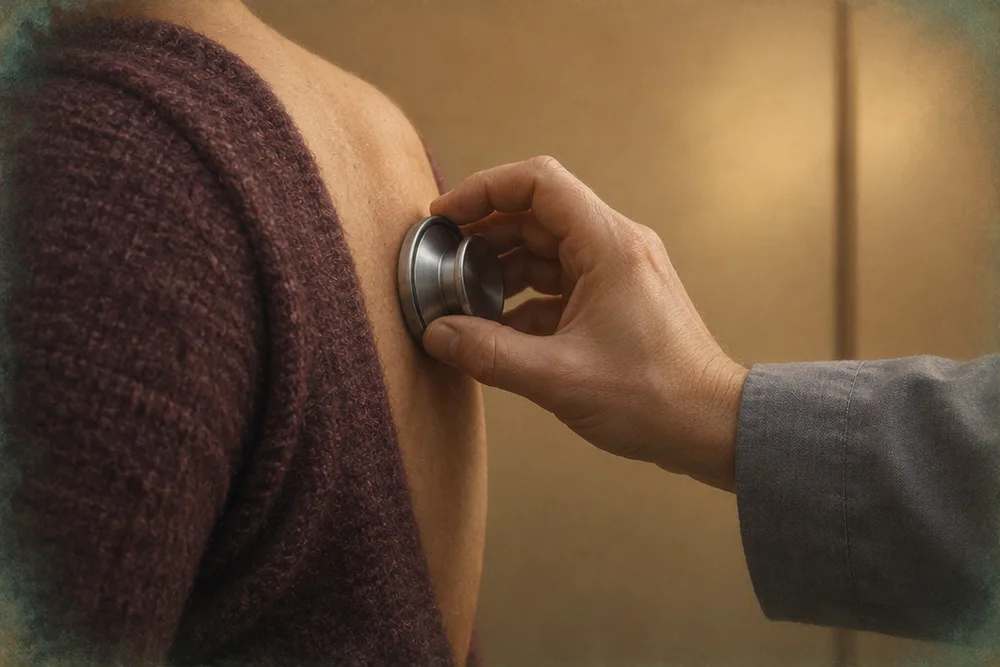
I answered what I knew. Anet answered the rest. The physician put a small metal listening cup against Vey’s back, then told the attendant to fetch a heated room and clean cloths. Her voice was calm and brisk. No one demanded papers before taking his weight from our hands.
At that, something in Anet’s face crumpled. She pressed her fist to her mouth. I put one arm around her shoulders while the attendants carried her father away.
“I thought they’d make us prove he belonged here,” she said.
“They may ask later.”
“But they didn’t now.”
“No.”