The Last Minute in the Vending Machine
Page 67 of 196
Chapters
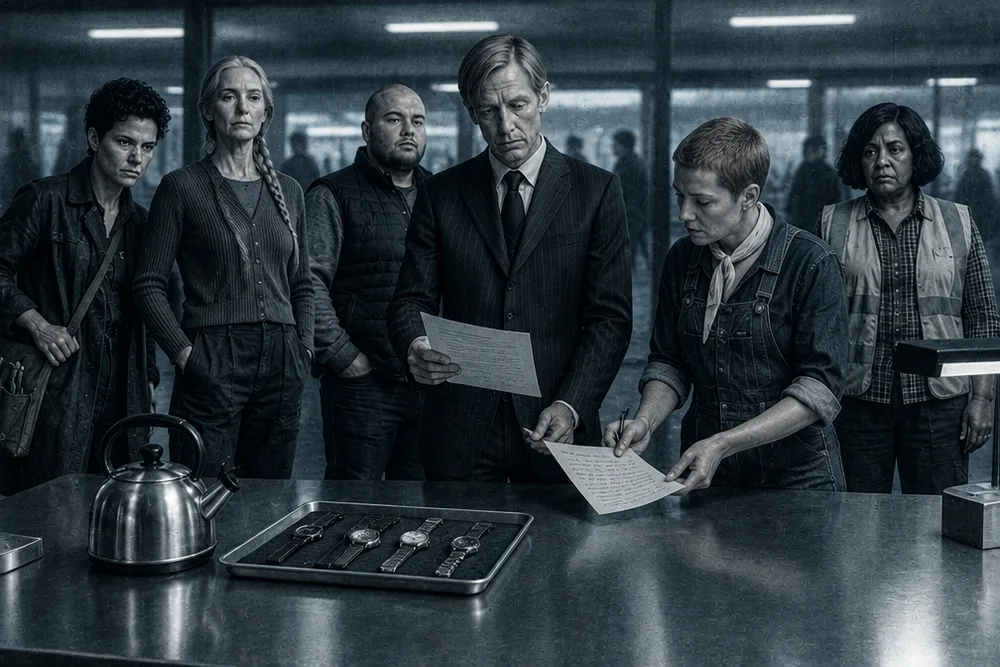
“We’re reading what you wrote,” he said. “Not what the board says you meant. If the sentence is wrong, say where. If you don’t remember, say that.”
The woman in the orange scarf, Mara Teel, found her statement first. She read it quietly, then drew a line beneath a phrase: waited by the west stairs until the board changed. “I meant the departure board,” she said. “Not the clock over the stairs. The board went from DELAYED to BOARDING. The summary says I was watching the platform clock.”
Miren wrote the distinction in the margin. “Did you tell the interviewer that?”
“I pointed at it. He wrote down ‘board.’ Maybe he thought that meant the clock.” Mara looked at the others. “There was a big clock. There was also the black board. I wasn’t looking at the clock.”
A man named Parel lifted his statement. It said he heard the departure announced before he saw the train move. “I thought that was the station voice,” he said. “I don’t know now if it was the speaker or the dispatcher through the window.”
“Can you remember the words?” Miren asked.
“The usual ones. Service to West Quay, doors closing.” He rubbed his thumb along the paper edge. “That doesn’t tell me which clock.”
“It might tell us which event you used as a reference,” she said. “Not when it happened.”
Ivo nodded. “Keep those separate.”
The correction was small, but it loosened the board’s neat account. The summary had placed Parel on the mezzanine, far enough from the lower platform to make his recollection peripheral. His original words placed him beside a speaker, listening for the call. Miren saw how a sentence could be made to locate someone twice: first in a place, then on a clock.
They moved through the statements one by one. A student named Elian had written that she checked the square clock above the ticket gates after a man asked whether the last train was late. A cleaner, Bess, remembered a spoken call and the hiss of the platform doors. A father with a sleeping child had noted the minute on his ticket machine receipt, but could not remember whether the receipt printed when he bought the fare or when he entered.
Each witness supplied a different piece and resisted the tidy phrase Miren had seen repeated in the chronology: at the time of departure. Sometimes it meant the moment a board changed. Sometimes it meant the announcement. Sometimes it meant a clock face. Sometimes it meant a train’s movement, noticed only after it had begun.