The Last Minute in the Vending Machine
Page 53 of 196
Chapters
At the hearing, Len would likely say the record was clear. The conversion had been certified; the chronology followed the recorded times; the awards had been calculated; the proceeding had concluded. Every sentence could be technically true and still leave the reader with the wrong sequence. Miren could not repair that with a louder claim. She would have to show exactly where the clock evidence stopped and the staffing record began.
She opened the draft correction again. The first paragraph was too defensive. She deleted “I did not intend” and replaced it with “My certification did not address.” Intention was impossible to measure; scope was not. The sentence became shorter and more difficult to soften.
She saved it as a private note and added a list of questions: What event did each witness time? Which clock did each reference? What did the roster pay? Who acknowledged the handoff? What did the board receive in full? The last question had no answer yet. The others depended on Tess and the passengers.
A message arrived from Len’s assistant asking whether Miren’s watch report could be delivered by the end of the week. She replied that she could provide mechanical findings, clearly separated from any conclusion about the crash timeline. She added that she had requested the complete roster and original comparison record. The response came back within minutes: the board would review whether those records fell within the scope of her assignment.
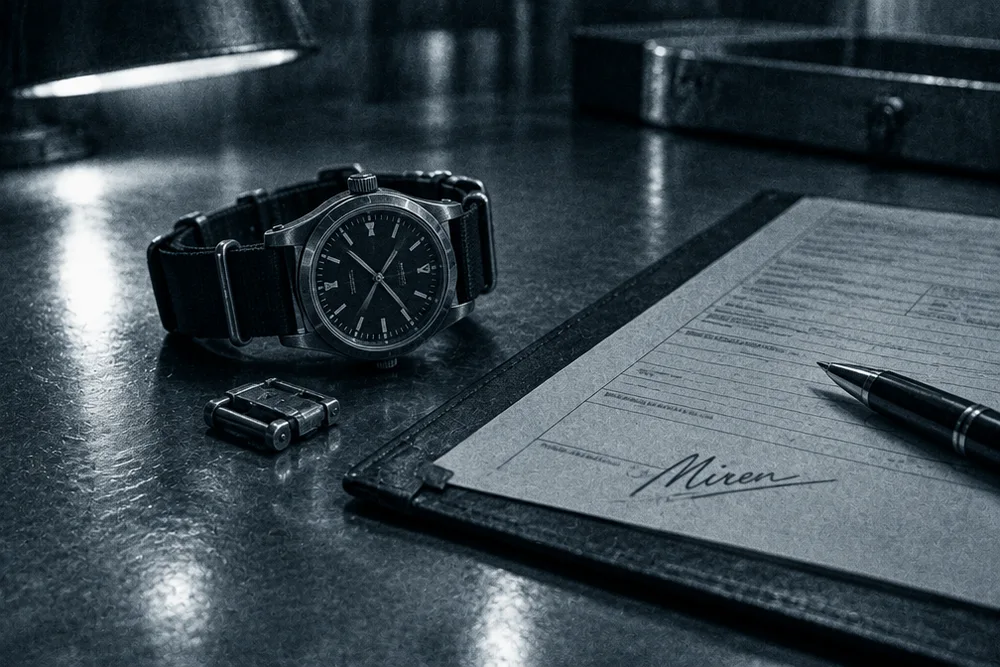
Miren placed the phone face down. The watches ticked on the bench. They did not know who had hired her, who had lost a minute, or whose name appeared beneath a sentence that had outrun its evidence. Their latches would stop the hands again, then release them. The movement would continue throughout.
She had once thought the cleanest work was work that stayed inside its boundaries. Now she understood that a boundary could be used as a screen. Her task was not to claim she had checked what she had not checked. It was to make the boundary visible, even if doing so exposed the space on the other side.
She returned the tools to their slots and locked the shop. Before she left, she took one more photograph of the first watch, its second hand moving and its minute hand poised just short of the latch. The image caught no history. It caught a mechanism, waiting to be tested.
On the way home, Miren stopped at the street-level union archive. The former pay office had a narrow counter and shelves built into what used to be a clerk’s partition. A small desk lamp shone on a stack of grievance binders. Tess was not there, but her note lay in a tray marked VOSSICK.