The Last Minute in the Vending Machine
Page 5 of 196
Chapters
Miren opened her tool roll, took out a loupe, and brought it to the vending glass without touching it. The watches all had different dials. Their second hands moved at different speeds, too, though only slightly. She could not yet tell whether that was wear, cheap construction, or deliberate adjustment.
She checked the wall clocks again. The first was two seconds slow against her timer; the second agreed. The difference was within the tolerance permitted for the old system. She wrote both readings beside the watch inventory, then looked through the grille at the stair where the man had stood.
A voice called her name from the upper landing. The attendant had returned, and now the broad man was beside him. The man held up the card again. This time Miren could make out a printed transit logo and a name beneath it. Ivo Senn. He tapped the card, then pointed toward the lower platform gate.
The attendant unlocked the grille and let him through. Ivo came down the steps carefully, short legs carrying his heavy torso with a slight hitch. His shaved head shone under the fluorescent lights. He wore a pressed shirt beneath the quilted vest, the careful neatness of someone dressed for an appointment. His right heel took his weight first.
“I’m sorry,” he said. “I didn’t mean to interrupt.”
“You didn’t.”
He looked past her to the machine. “Those are the watches?”
“Yes.”
“You’re inventorying them?”
“That was the request.”
“And you’ll set them?”
Miren watched his face. The cleft in his chin deepened when he pressed his lips together. “I haven’t decided.”
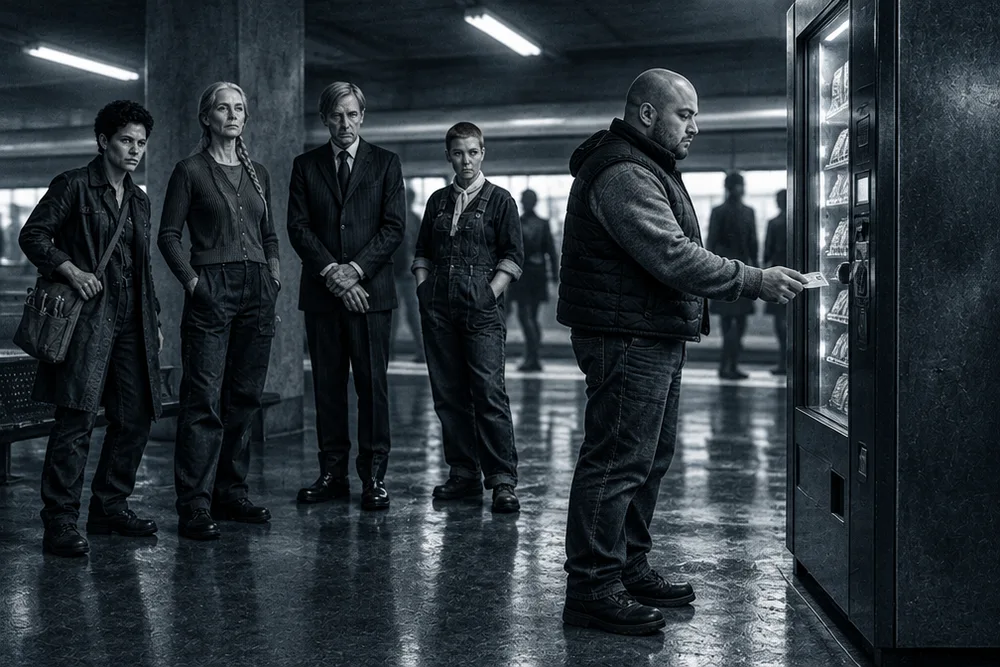
He nodded once, as if he had expected that answer. “I’m Ivo Senn. My sister was on the train.”
“I’m sorry.”
“People say that and then ask what time she died.”
Miren closed her notebook. She did not ask. Ivo looked at the machine, at the small cream price labels lined up beneath each watch. His hand hovered near the glass but did not touch it.
“They weren’t here before,” he said. “Not when I came down for the first inspection.”
“When was that?”
“Three years ago.”
“Why are they here now?” Miren asked.
“That’s what I wanted to know.” His eyes moved from the watch row to the dead dispatch window. “The board said the station was cleared. No public access, no concessions. Then I saw the lights through the stairs.”
“Did you buy one?”
“No. I thought they might be evidence. Then I thought the board wouldn’t sell evidence for four dollars.”
Miren glanced at the handwritten sticker. “They may not be.”