The Last Minute in the Vending Machine
Page 2 of 196
Chapters
The vending machine’s clock was blank. She checked her pocket timer against the nearest public face: 11:18:26, within a second. Then she began to compare the watches. She did not touch the crowns. Each dial was a small claim made under glass, and she had learned that a claim was easier to spoil than to understand.
A yellow sticker on the machine’s side said the power had been isolated. The watch mechanisms were battery-run, she supposed, though she could see no battery compartments from the front. She crouched to inspect the coin return. A folded card had been taped inside the metal flap, facing out. In black marker, a line read: PLEASE BUY ONE. Miren straightened, looked toward the dark dispatch window, and felt the station’s silence settle around the words.
The machine took a four-dollar coin stack, not a card. Miren had two singles and a handful of transit tokens; no coins. She walked back toward the glazed stair and called up to the uniformed attendant on the live level. He looked down through the glass, pointed at the grille, and mouthed something she could not hear. She held up a bill. He shrugged and went on with his rounds.
She returned to the machine, knelt, and tried the coin return again. A narrow service seam ran along the lower panel. It had been repainted, but one screw showed fresh tool marks. She knew better than to open it without authorization. The contract on her clipboard was not yet signed, and the inventory task did not include vending equipment. She took out her phone to photograph the row instead.
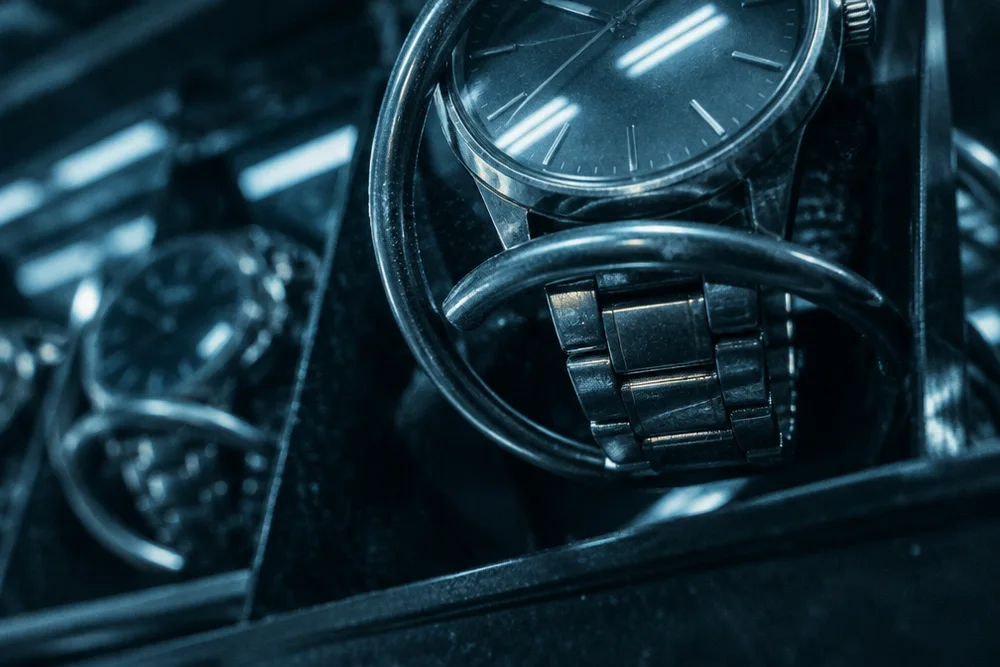
The camera flattened the watch faces. She adjusted the angle, blocking the overhead glare with her palm. At that distance she could read a scratched maker’s name on the steel-bracelet watch: DORNE. The watch was running fast by nearly seven minutes. The oval one lagged by eleven. A battered square watch showed the correct hour but its second hand paused every few beats, as if reconsidering.
Miren took a picture of the whole machine, then another of each row. The photos were time-stamped by her phone, but she wrote the reading beside each frame in her notebook anyway. The habit came from years of repairs: a photograph could preserve what a hand had seen, not what a hand had assumed. She included the machine’s location, the dead dispatch window opposite it, and the two wall clocks in the first entry.
At the bottom of the page she wrote: Twelve running watches, apparently for sale. Offsets inconsistent. Do not adjust.