The Last Minute in the Vending Machine
Page 194 of 196
Chapters
At the bottom of the glazed stair, Miren paused and looked back at the sealed lower island. The machine stood against the tiled spine, its blank display reflecting a strip of fluorescent light. It had been removed from service after the hearing. The old concession access had been closed with a bolted plate. Nothing inside it was for sale now. The vending machine had offered twelve little pauses at different prices, and the board had tried to sell one clean chronology as settled fact. Neither transaction could continue unchanged.
She thought of the original watches in the archive, eleven together and Ada’s among them. She thought of the twelfth watch against her wrist, running. It would go to the clock shop when the archive had finished documenting the mechanism. There she would clean it, oil it, check its rate, and return it to Ada if she still wanted it. The removed latch could remain with the display as a reminder of the demonstration, not a substitute for the signed testimony.
“You’ll be late,” Ada said behind her.
“I have a clock shop.”
“You have clocks in it.”
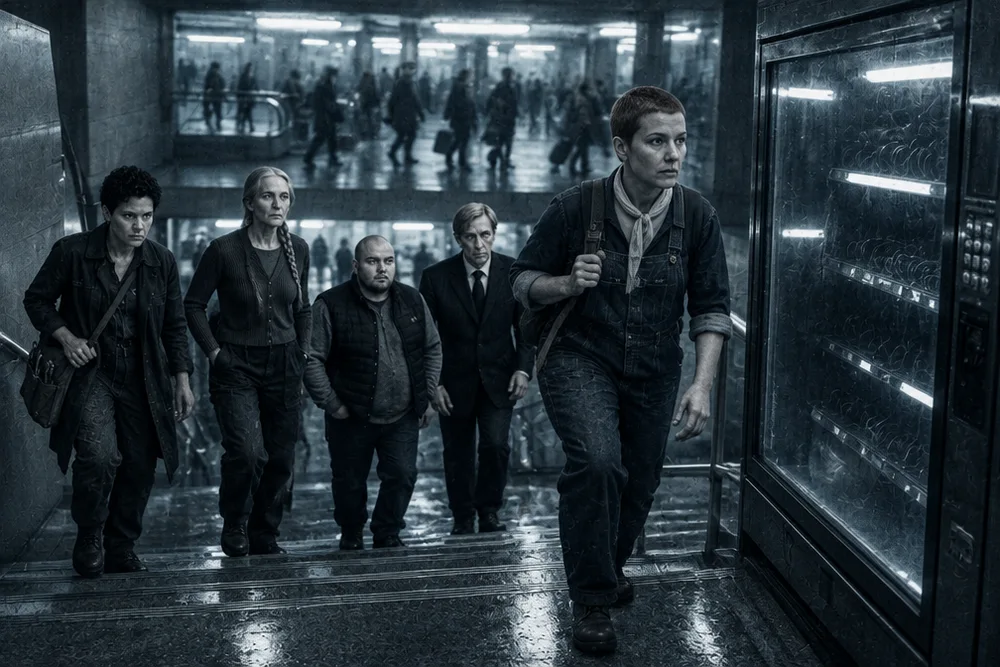
Miren turned. Ada’s mouth had bent at one corner, not quite a smile. She had the look of someone who knew that a repairer’s excuse was also a promise of work to come.
“I’ll go,” Miren said.
She took the stairs at an even pace. The interchange opened around her: ticket gates, information screens, the sharp smell of wet wool drying in public heat. At the landing, she could see the board showing the recorded delay, and beyond it the new departure time. The trains would keep running. Their lateness would not be a verdict on the dead, or proof that a minute had been wasted. It would be a fact attached to a service, in a system where the people responsible could be named.
Miren reached the mezzanine and passed the window of her workshop. On the test bench, under the green-shaded lamp, a customer’s clock waited with its back off and its gears exposed. She set down the tool roll, but before opening it she listened to the ticking from behind the glass. The beat was steady. She let it continue while the public board changed again.
In the shop, she laid Ada’s watch beside the test stand. Its second hand moved across the face. She wrote the time on a service slip, then checked it against the wall clock. A few seconds separated the readings, within the watch’s ordinary tolerance. She entered the difference without correcting it yet. A clock’s truth began with a description of what it actually did.