The Last Minute in the Vending Machine
Page 191 of 196
Chapters
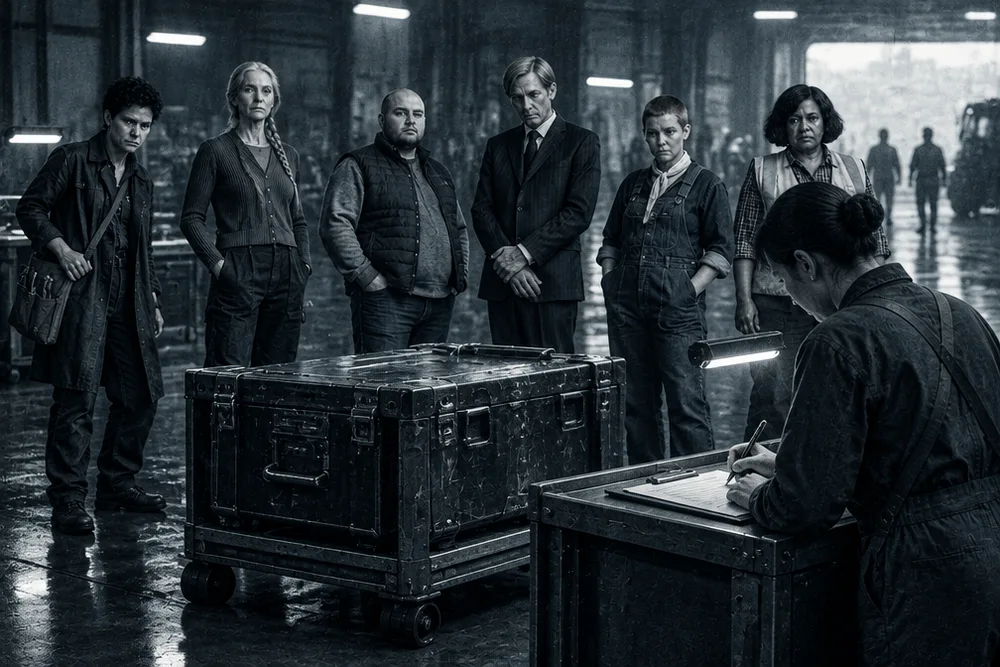
The outgoing worker handed the thermos to the incoming one. The exchange was ordinary, almost clumsy. The lid clicked against the body. The incoming worker asked whether the station radio had been cutting out. The outgoing worker said it had once, at the south stair, and showed her a note in the log. The incoming worker read it, repeated the location, and signed below. A small square filled on the display. The outgoing worker watched until the screen registered the answer.
Miren leaned toward the panel. Beneath the two clocks, a line showed the paid overlap as a live interval. The departure board on the mezzanine updated when the crew finished. From this side of the glass, she could see the new delay begin and remain visible, no apology attached to it. On a day when the trains ran on time, the number might be zero. It would still be a number the public could read.
Ada watched the worker leave. “I thought if I admitted the signature, the pension would go,” she said. “I thought the summary was the only thing that could keep the years I’d earned intact.”
“And now?” Miren asked.
“Now the index carries my name.” Ada touched the edge of her cardigan. “The pension stayed. The story changed.”
It was not a clean bargain. Nothing about the case had been. Ada had still chosen silence when she knew a summary was false. Tess Brin had still traded a paid overlap for two protected jobs. Len Orra had still taken a form whose headings named the public clock and used an extract that concealed them. Miren had still signed a comparison sheet that certified clock calibration without stating what the board would later claim it certified. The corrected record held those choices beside the institutional machinery that had made them useful.
Across the interchange, a child pulled at an adult’s sleeve, pointing toward the board. The adult looked up, read the delay, and kept walking. The train was still held at the platform. The waiting had become visible, but it had not become painless. Miren thought that was the limit of a good rule: not to make delay vanish, but to prevent its cost from being assigned to the person least able to refuse it.
The incoming worker stepped to the yellow mark. She looked at the display, then at the empty doorway where the outgoing worker had gone. The names remained on screen until the next pair came forward. No alarm sounded. No supervisor urged her through. The seconds moved from one digit to another, plainly and without ceremony.