The Last Minute in the Vending Machine
Page 14 of 196
Chapters
The next morning, she put the watches back into the machine without returning them to their slots. They lay in their numbered trays, their cases open to view, their small holds documented. She locked the service door and photographed the empty panel. Then she worked through the affidavits again, checking the times against the printed chronology and the surviving station diagrams.
The diagrams showed three public clocks and one in the dispatch room. The one by the lower stair had been mounted above the old route map. The one on the mezzanine faced the working interchange. The third hung beyond the platform entrance, where a rider might glimpse it through the glass. Their maintenance records were not in the case file. A note said all station clocks were synchronized to the master clock, but gave no date or method.
A passenger’s written alibi said he had watched the mezzanine display change from 10:16 to 10:17, then heard the departure call. Another said she had looked at her own wristwatch after the call and remembered “about ten seventeen.” Those were not interchangeable descriptions. A displayed minute might have rolled before or after a clock’s second hand crossed the top. A spoken call might be keyed to a schedule, not the clock in the room.
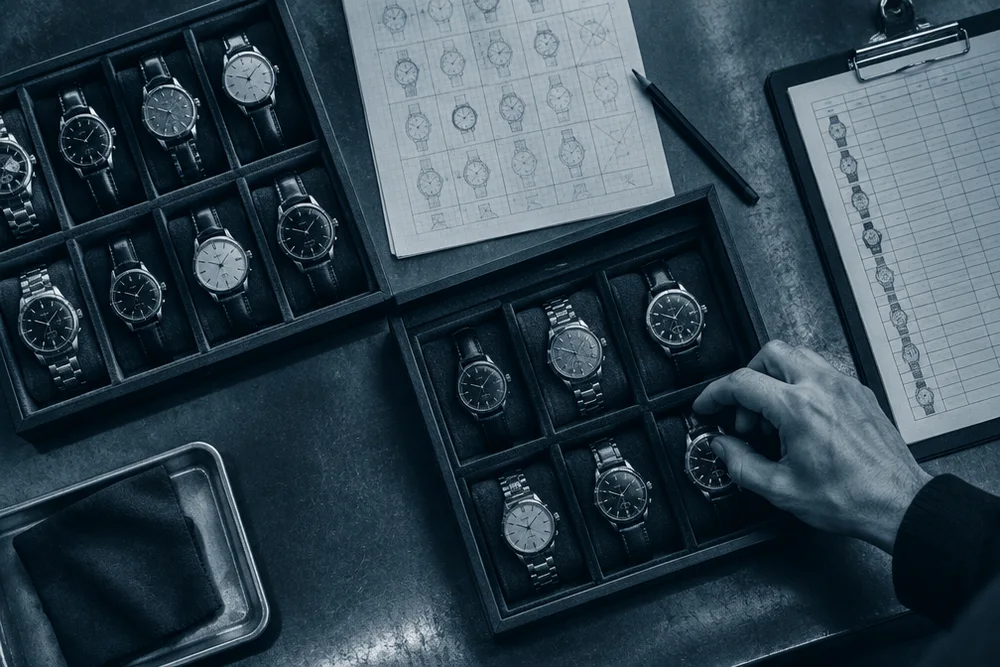
Miren built a grid with a column for each reference. She left the column for the watch holds blank. Her pencil hovered over it, then she put the pencil down. She could compare a dial to another dial, a record to another record. She could not yet claim that a one-minute hold represented a specific interval in the crash timeline.
The board’s inventory sheet waited on the bench beside her contract. Its last line said all watches were to be set to the official time before the hearing. Miren pictured the watch she had bought at Glasshook, its second hand ticking steadily while its minute hand lay out of step with every clock in the room. If she corrected it now, she would erase the only condition she had been hired to examine.
At the station that afternoon, the lower island smelled of damp concrete and old electrical heat. Miren unlocked the machine and examined each tray with a ruler. The numbered tabs fitted the shallow grooves. They were not accidentally left behind. She slid one out and replaced it, noting how its edge caught against a small ridge of felt.